
What Dental Records Do You Need for Implants in China?
Use this pre-travel checklist to organise imaging, photos, health history and goals before an implant review in China.

Better records help clinicians give a more useful preliminary opinion and help you avoid unrealistic travel assumptions. A remote review does not replace an examination, but it can clarify what information is missing, whether a staged visit is more likely and which questions are worth answering before you travel.
Imaging
A recent panoramic X-ray provides a broad overview. CBCT data can show bone and nearby anatomy in more detail, although the clinic may require new imaging in Beijing. If you have a scan, ask the imaging provider whether the original DICOM files can be shared as well as a report or screenshot. Do not delay care just to obtain every possible record; a coordinator can explain what would be most useful for the first discussion.
Clear photos
Include front and side smile photos, teeth together, upper and lower arches, and close-ups of the area of concern when possible. Photos cannot confirm bone quality or a treatment plan, but they can help explain visible concerns, missing teeth, wear, gum changes and aesthetic goals. Natural light and a recent date are usually more helpful than heavily edited images.
Dental and medical history
List previous implants, grafts, periodontal treatment, smoking or vaping, diabetes, osteoporosis medicines, blood thinners, allergies and other relevant conditions. Never stop medication without your own clinician’s advice. Also include previous treatment records if you know an implant brand or component system; this can matter for maintenance and future restorative planning.
Your goals and practical constraints
Explain whether your priority is fixed teeth, chewing function, appearance, minimising visits or a specific travel window. The safest plan may not be the fastest plan. The how-it-works guide explains why the likely direction from records can still change after an on-site examination and updated diagnostics.
If you do not have recent records
Do not assume you cannot begin planning. Describe the problem, any previous treatment and when your last examination or X-ray was taken. A coordinator can indicate whether recent imaging is likely to be helpful before travel or whether the first useful step is arranging an on-site diagnostic visit. Avoid relying on old screenshots alone when the condition may have changed; date each file where possible so the reviewing clinician understands its limits.
Make the review easier to follow
Put files in a simple order: imaging, photos, dental history, medical information, goals and travel constraints. Add a short note identifying the tooth or side that concerns you most. This does not make the review clinical evidence by itself, but it reduces avoidable back-and-forth and helps you notice unanswered questions. Keep original files safely stored, and only share information through a channel that has been explained to you.
Before sending anything, check that the files are readable and that the dates are visible. A short timeline of extractions, implants, crowns or recurring symptoms can be as useful as a long message. It helps the clinician understand which details are current and which may need confirmation after examination.
How records improve a cost and timeline discussion
Records make it easier to separate a broad cost range from a meaningful staged estimate. They can reveal questions about extraction, grafting, provisional teeth, final restorations or a second visit that a headline price cannot answer. For that wider context, read our guide to dental implant costs and timelines in China.
Share information through the right channel
Start with the essentials rather than highly sensitive documents in public comments or social media. When you are ready, use the secure inquiry form to describe your goals and available records; a coordinator can explain the appropriate next step for a preliminary case review.

This guide is general information, not a diagnosis or personal treatment recommendation. Seek advice from a licensed dental professional who can examine you.
Related patient guides

Porcelain Veneers in China: A Clinician-Led Smile Design Service
See how a porcelain veneer service in China moves from smile goals and records to clinical assessment, design review, ceramics and follow-up.
Read the guide →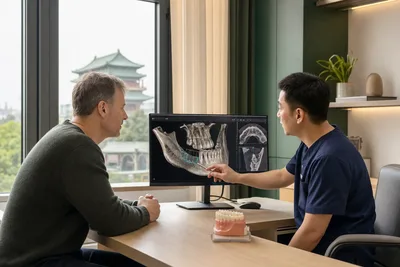
Bone Grafting for Dental Implants in China: A Coordinated Planning Service
Learn how bone-grafting planning for dental implants in China moves from records and Beijing imaging to clinician-led options, staging and follow-up.
Read the guide →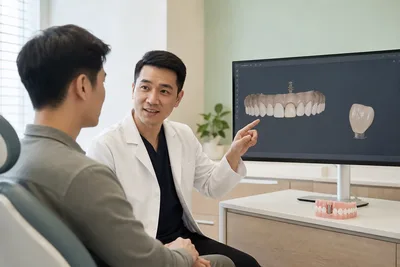
Front Tooth Implants in China: Temporary-Tooth and Smile Planning
Explore clinician-led planning in China for a missing or failing front tooth, including records, temporary-tooth options, gum and bite assessment, and final crown coordination.
Read the guide →
Loose Dentures in China: Implant-Supported Denture Planning and Coordination
Explore a clinician-led implant-supported denture planning service in China, from records and Beijing assessment to removable design, maintenance and follow-up.
Read the guide →