
Replacing a Failing Tooth with an Implant in China: A Coordinated Planning Service
Learn how extraction-to-implant planning in China can move from records and a Beijing assessment to clinician-led options, restorative design and follow-up.
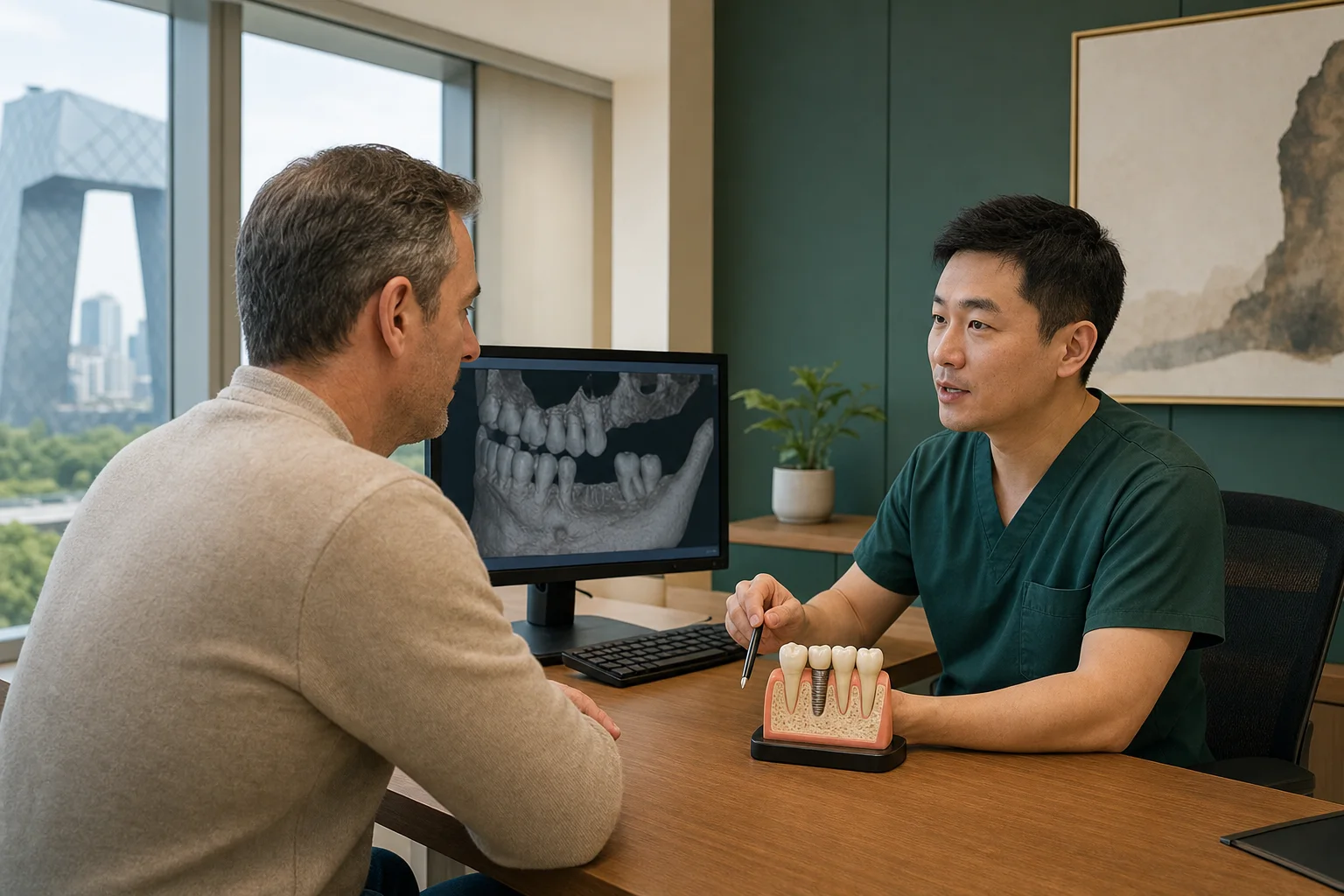
When a tooth is cracked, repeatedly infected, severely worn, loose or no longer thought to be predictably restorable, it is natural to ask whether it can be removed and replaced with an implant. But extraction followed by an implant is not an automatic sequence and it is not a same-day promise. The clinician first needs to decide whether the tooth can be retained, what is causing the problem, how the surrounding gums and bone look, and what replacement would serve the patient’s bite and smile over time. Our extraction-to-implant planning service in China helps international patients organise those questions before travel, then connects them to a clinician-led assessment in Beijing.
China Dental Implants and Pinnacle Medical China coordinate practical planning for international patients. Licensed partner clinicians remain responsible for examination, diagnosis, tooth-retention decisions, extraction, implant and restoration recommendations, consent and clinical care. That distinction protects patients: coordination can clarify which records may be useful and how a possible pathway could be organised, but it cannot decide from a photo that a tooth must be removed or that an implant can be placed on a particular date.
Start with whether the tooth can be kept
A failing tooth is not one diagnosis. Decay, a fracture, root-canal problems, gum disease, trauma, bite forces and a failing crown or bridge can create different clinical situations. In some cases, the dentist may discuss repair, root-canal treatment, periodontal care, a crown, bite management or monitoring rather than extraction. In other cases, removal and replacement may be the more appropriate route. Our dental implant service overview explains why an implant plan begins with oral health and a final restorative goal, not an assumption that every damaged tooth should be replaced surgically.
This is particularly important for patients considering travel. A short online message that says “this tooth needs an implant” may omit the questions that determine whether the tooth is salvageable, whether an infection needs treatment first, whether the gum and bone are suitable and what kind of temporary or final tooth replacement would fit the rest of the mouth.
Who may find this coordinated service useful?
The pathway may be relevant to adults who have been told that one tooth may need to be removed, who have a repeatedly failing crown or root-canal-treated tooth, a visible fractured tooth, a persistent problem under an existing restoration, or a gap where the extraction decision and replacement plan need to be discussed together. It can also help patients who want to understand the difference between retaining the tooth, leaving a stable space, a conventional bridge, a removable option and an implant-supported crown.
It is not an emergency service. Severe swelling, fever, uncontrolled bleeding, trauma, difficulty breathing or swallowing, spreading pain or other urgent symptoms require local emergency dental or medical assessment. Do not postpone urgent care while organising international treatment. A remote review can prepare useful questions, but cannot diagnose infection severity or make an emergency-care decision.
Step 1: gather the story behind the tooth
Before travel, patients can share recent radiographs or CBCT data where available, photographs, the history of root-canal treatment, crowns, fillings or trauma, any previous treatment plans, and a description of current symptoms or changes. Relevant medical and medication history, smoking or vaping, diabetes, gum treatment, osteoporosis medicines, blood thinners and grinding or clenching may also affect the clinical discussion.
The value of records is not to make a final diagnosis from abroad. It is to help the Beijing clinical team identify what needs to be assessed and to make the first conversation more focused. Our guide to records for a Beijing implant review outlines the types of imaging, dental history and practical information that can support preliminary planning.
Step 2: confirm the retention or extraction decision in person
At the clinic, the treating dentist may examine the tooth, gums, adjacent teeth, bite, existing restorations and the available bone around the possible implant site. New photographs, digital scans, radiographs or three-dimensional imaging may be recommended according to the case. The assessment may support the preliminary idea, make tooth retention more realistic, identify the need for preparatory care, change the replacement option or introduce a different sequence.
A responsible plan gives the clinician room to say that extraction should not be rushed. It also gives the patient room to ask what is likely to happen if the tooth is retained, why removal is being considered, what alternatives exist and how the proposed solution would be maintained. Our single dental implant pathway explains the broader assessment, restoration and record-keeping questions that may follow when a single tooth is missing.
Step 3: do not assume that extraction and implant placement happen together
Some cases may be considered for implant placement at the time of extraction, while others may need a different sequence, healing time, bone or gum preparation, or a temporary replacement before an implant is placed. The appropriate route depends on clinical findings such as infection, bone, gum condition, tooth position, the planned restoration and the patient’s health. It is not something a coordinator, an advertisement or a flight date can safely decide.
Patients should ask which stage is being proposed, what could change after the tooth is assessed or removed, whether a temporary replacement may be discussed and how the final restoration is being planned. Our implant timeline guide explains why surgical and restorative stages may be separated and why travel scheduling should follow a confirmed clinical plan rather than an online timetable.
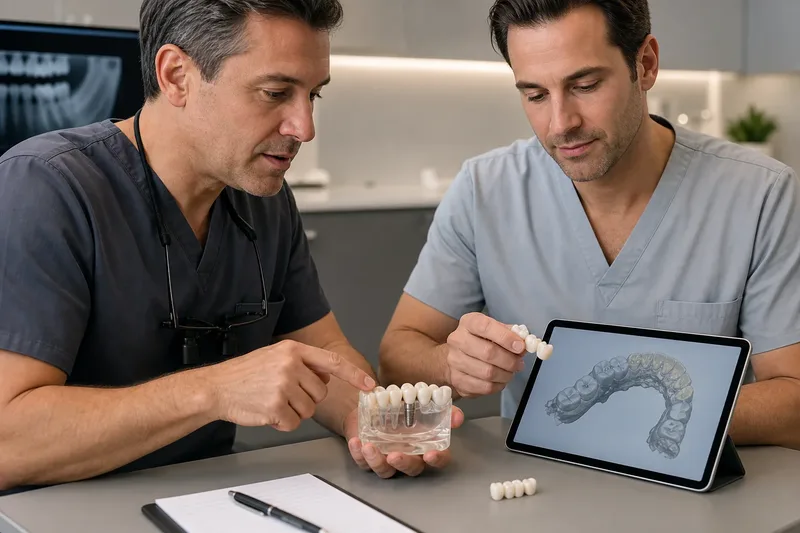
Step 4: plan the final crown before the pathway is fixed
An implant does not replace the visible tooth on its own. The final crown needs to work with neighbouring teeth, the opposing bite, gum shape, smile line where relevant and the patient’s ability to clean around the restoration. Digital scans, photographs, diagnostic models and planned tooth positions can help the surgical and restorative teams work from the same information.
Thinking about the final crown early can prevent the plan from being reduced to extraction alone. It also makes the limitations clearer: the final tooth shape, material, timing and any provisional stage should be discussed after the clinical team has examined the patient and confirmed the appropriate route. A well-organised service makes those decisions understandable without replacing the consent process.
Step 5: include follow-up and documentation from the start
Before leaving Beijing, patients should ask what clinic-issued treatment summary, images, implant-system information, restoration details and follow-up instructions will be provided. If treatment is staged, the patient should know what has been completed and what decision or visit remains. The treating clinician’s aftercare instructions are the primary guide, and a local dentist may be important for routine care or urgent needs after return travel.
China Dental Implants and Pinnacle Medical China can help route non-urgent practical questions to the appropriate Beijing team and keep records and appointment planning clearer. We do not diagnose online, decide whether a tooth should be extracted, perform a procedure or guarantee how a site will heal. Those decisions remain with licensed treating clinicians.
Start with the tooth you are trying to save or replace
You do not need to decide in advance that an implant is the correct answer. Begin with what has happened to the tooth, your available records, your health context and travel constraints. You can request a preliminary extraction-to-implant planning review; the next step is to clarify what can be discussed from records and what must wait for the licensed clinician’s in-person examination in Beijing.
This guide is general information, not a diagnosis or personal treatment recommendation. Seek advice from a licensed dental professional who can examine you.
Related patient guides
Single Dental Implant in China: A Coordinated Service for One Missing Tooth
See how a single dental implant service in China moves from records and Beijing assessment to implant planning, crown timing and follow-up.
Read the guide →
Bone Grafting for Dental Implants in China: A Coordinated Planning Service
Learn how bone-grafting planning for dental implants in China moves from records and Beijing imaging to clinician-led options, staging and follow-up.
Read the guide →
What Dental Records Do You Need for Implants in China?
Use this pre-travel checklist to organise imaging, photos, health history and goals before an implant review in China.
Read the guide →
Dental Implant Timeline in China: Why Some Cases Need Two Visits
The travel schedule for implants depends on biology, clinical stages and the final restoration—not only on flight dates.
Read the guide →