
Dental Implant Timeline in China: Why Some Cases Need Two Visits
The travel schedule for implants depends on biology, clinical stages and the final restoration—not only on flight dates.
A dental implant journey is planned around biology and clinical stages, not only around flight dates. Some patients can complete certain restorative work in one coordinated trip, while others need separate visits for surgery, healing and definitive teeth. A realistic timeline starts by identifying which stage is being discussed.
Surgery and restorative work may be separated
Extraction, grafting, implant placement, provisional teeth and final crowns or bridges are distinct clinical steps. The time between them depends on healing, stability, bite and case complexity. An early estimate can describe likely timing, but the treating clinician confirms the schedule after examination and any updated imaging.
Immediate loading has limits
A fixed provisional restoration soon after surgery may be considered in selected cases. It does not mean that a final bridge is ready or that every patient can follow the same schedule. Ask whether the proposal concerns a provisional solution, the definitive restoration or both, and what review appointments are needed.
Plan travel with contingency time
Arrive with enough time for diagnostics and questions before treatment begins. After a procedure, the clinician may recommend a period near the clinic for review. Flights, accommodation and work arrangements should leave room for clinical changes, especially for full-arch or complex restorative cases.
Make the second visit easier
If a later restorative visit is likely, keep the first-visit records, follow instructions and discuss a realistic return window before leaving. The final restoration may depend on healing and bite checks that cannot be predicted perfectly before treatment. Planning for two stages can be safer than assuming every case should be compressed into one trip.
Put the information in context
A useful pre-travel discussion connects this topic to the whole sequence of care, rather than treating one answer as a promise. Your current oral health, imaging, medical history, bite, time available and the findings of an in-person examination can all affect the final plan. For a related planning question, read cost and timeline planning guide. It explains how early information can be used without presenting it as a final diagnosis.
Prepare for a case review
Keep recent imaging, clear photographs, relevant dental history and your travel constraints together. That makes it easier to discuss the likely stages and the questions that still need an on-site answer. The full-mouth reconstruction pathway gives the treatment-specific context; when you are ready, request a pre-travel case review to start with the information you already have.
Questions worth writing down
Before a call or appointment, write down the point you most need clarified, the records you have, the time you can spend in Beijing and any constraint that could affect the plan. Ask for plain-language explanations of the likely stages, what is included in the discussion and what cannot be known until examination. Written notes help you compare information later and make it less likely that a practical travel question is mistaken for a clinical answer.
Use written information carefully
A treatment summary, estimate or coordinator message can help you prepare, but it should be read alongside the clinic’s in-person explanation and consent process. Keep the date of each record and ask when a previous scan, quote or plan should be updated. Care plans can change because health and clinical findings change; transparent documentation gives you a clearer basis for deciding whether to travel, proceed, wait or ask another question.
What must still be confirmed in person
This guide is general education for planning a dental journey. A licensed treating clinician must confirm diagnosis, alternatives, risks, materials, fees, timing and suitability after examination. Build enough flexibility into your travel schedule for updated diagnostics, questions and a plan that may change when the clinical picture becomes clearer. Keep your own decision-making pace throughout the process.
This guide is general information, not a diagnosis or personal treatment recommendation. Seek advice from a licensed dental professional who can examine you.
Related patient guides

Dental Implants in China: Cost, Timeline and Planning for International Patients
For international patients, the real question is not simply whether implants cost less in China. It is whether the clinical plan, travel schedule, materials and follow-up are clear before booking a flight.
Read the guide →
What Happens at an On-Site Dental Assessment in China?
An on-site assessment is where a preliminary idea is checked against examination, imaging and real clinical findings.
Read the guide →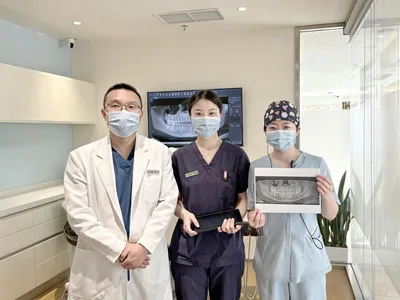
Immediate Loading After All-on-4: What May Affect Eligibility?
Immediate loading can be appropriate for selected cases, but it is a clinical decision rather than a travel package guarantee.
Read the guide →
How to Compare a Dental Implant Quote in China
A useful dental implant quote explains the treatment sequence, materials, visits and uncertainty—not just a starting number.
Read the guide →