
Single Dental Implant in China: A Coordinated Service for One Missing Tooth
See how a single dental implant service in China moves from records and Beijing assessment to implant planning, crown timing and follow-up.
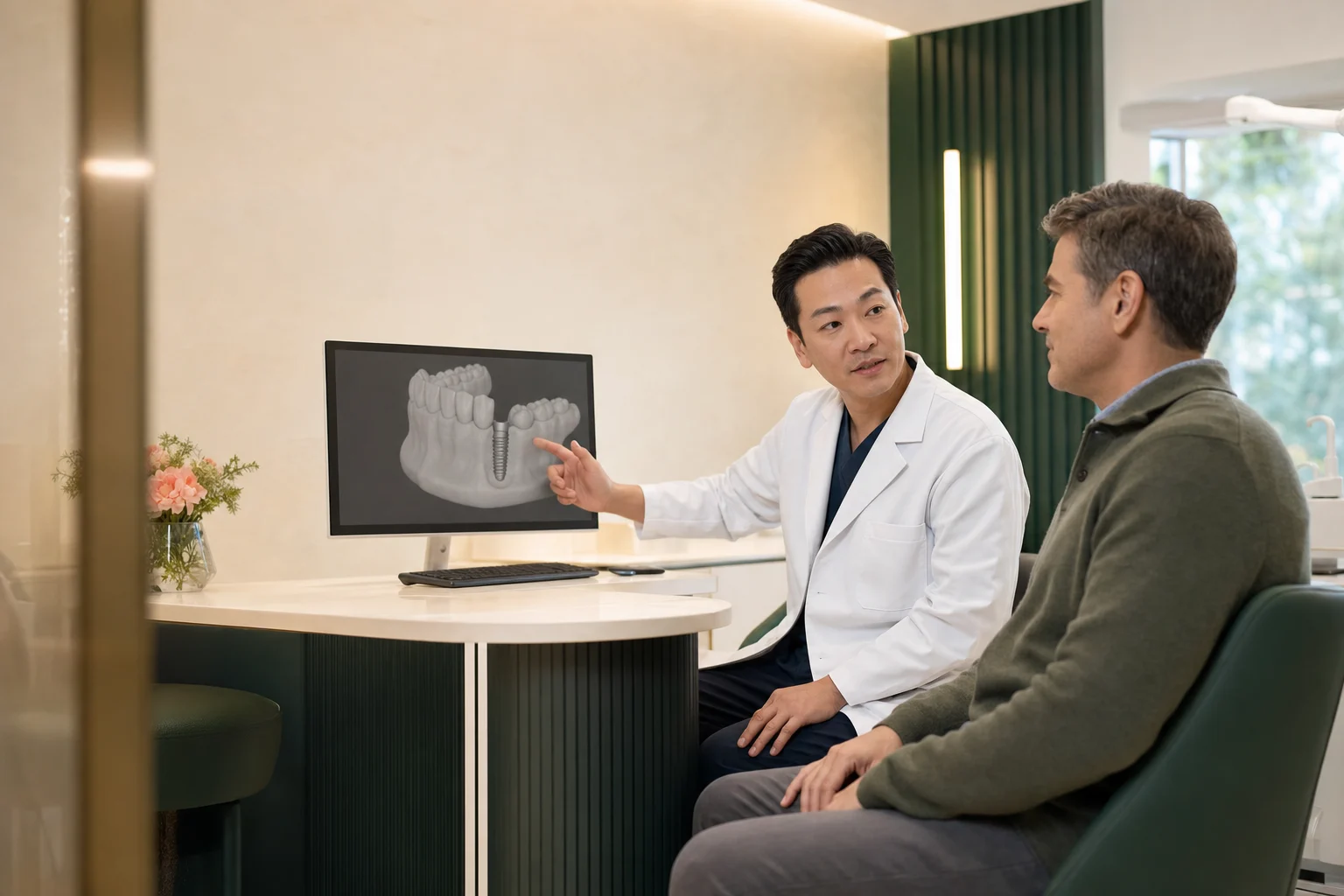
Replacing one missing tooth can sound like the simplest kind of implant treatment. Yet the decision is still personal and clinical: the space may sit in a highly visible part of the smile, the neighbouring teeth may be healthy, the bite may be carrying extra force, or the bone and gum contours may need careful assessment. Our single dental implant service in China is built for that reality. It gives international patients a structured way to move from a practical concern—one missing, failing or non-restorable tooth—to an informed discussion with a licensed Beijing clinician.
China Dental Implants and Pinnacle Medical China coordinate the patient-facing parts of the journey. Licensed partner clinicians are responsible for diagnosis, treatment recommendations, consent and clinical care. A coordinator can make records, appointments and questions easier to organise; only the treating dentist can determine whether an implant is appropriate for a particular tooth space.
A single-tooth service, not a one-size treatment promise
A dental implant is a fixture placed in the jaw to support a replacement tooth. For a single missing tooth, the final visible tooth is usually a custom crown. An implant may avoid preparing adjacent teeth for a conventional bridge, but it is not automatically the best answer in every situation. The condition of the surrounding teeth, bone and gums, the position of the gap, the bite, general health and personal priorities all matter. Our dental implant service overview sets out the wider planning principles behind that decision.
Some people may be better served by preserving a tooth if it can be restored, considering a resin-bonded or conventional bridge, discussing a removable option, or leaving a space where that is clinically acceptable. A credible service does not begin by treating every gap as an implant sale. It begins by making room for alternatives and by being clear about what cannot be decided remotely.
Who may benefit from an initial review?
The pathway may be useful for adults who have already lost one tooth, have a tooth that has been described as non-restorable, or are planning an extraction and want to understand their replacement options. It can also help a patient with a long-standing gap who wants to know whether a crown on an implant is worth exploring before travelling.
Early planning is especially valuable when the tooth is in the smile line, when there is a history of gum treatment or grinding, when an extraction or graft has been mentioned, or when travel dates are limited. Those facts do not confirm eligibility; they simply help the clinical team identify the questions that an in-person examination must answer.
Step 1: send the information that gives the conversation context
Before travel, patients can share recent panoramic imaging or CBCT data if available, clear photographs of the teeth and smile, relevant dental history and a concise list of medications or health conditions. Previous extraction notes, root-canal information, bridge details and records for any existing implants may be useful too. The proposed clinic may still need to take its own imaging or records after you arrive.
It also helps to explain what matters most to you. Is the main concern chewing, appearance, avoiding preparation of adjacent teeth, timing around a trip, or understanding whether a temporary replacement is needed? Our guide to records to send before a Beijing implant review explains how this information can make an early discussion more useful without pretending to replace a diagnosis.
Step 2: make the roles and likely decisions clear
Once the available information has been organised, the coordination team can identify an appropriate partner setting, help gather practical questions and discuss a possible appointment window. This is preparation, not a remote prescription. The treating clinician may need to inspect the gap, evaluate gum health, assess bone volume and nearby anatomy, review how the upper and lower teeth meet, and check the status of surrounding teeth before recommending a course of care.
That distinction matters for international travel. A patient should know where care is proposed to take place and who is responsible for the clinical decision. Our single dental implant treatment pathway outlines the stages that may be discussed, while the final plan always follows the clinician’s own examination and consent process.
Step 3: assess the tooth space in Beijing
An on-site assessment may include examination, photographs, digital scans, radiographs or three-dimensional imaging when the clinician considers it appropriate. The dentist considers the amount and quality of bone, the shape and health of the gums, the position of adjacent roots and anatomical structures, the available restorative space and the forces created by the bite. If a patient grinds or clenches, that risk should be part of the conversation about design and maintenance.
The findings may confirm that a straightforward implant route is reasonable. They may also point to preparatory treatment, a delayed plan after extraction, a grafting discussion, treatment for gum disease or a different replacement option. A change in recommendation after proper diagnostics is not a failure of planning; it is the point of letting the clinician assess the real situation before care begins.
Step 4: plan the implant and the future crown together
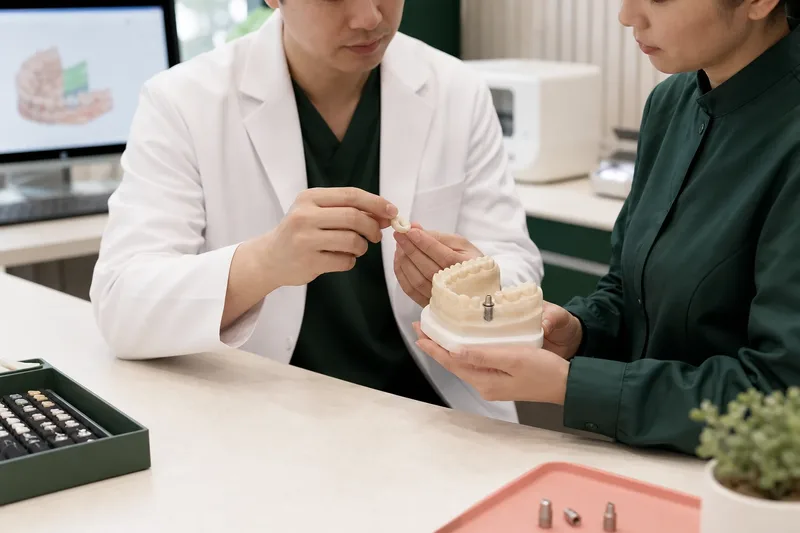
A single implant is not only a surgical fixture. The planned crown, gum contour and bite influence where and how the implant is positioned. The clinician and restorative team may use scans, photographs and a diagnostic design to plan the final tooth shape and how it relates to its neighbours. This helps make the surgical and restorative parts one coherent plan rather than two disconnected appointments.
If an implant is placed, the next stage depends on clinical findings and healing. Some cases require a period for integration before the final crown is made; others may follow a different sequence when the clinician considers it suitable. A temporary solution may be discussed when appropriate, but it should never be described as a guaranteed outcome or a substitute for clinical review. Exact timing, number of visits and travel dates should be confirmed only after the examination and clinic schedule are known.
Step 5: protect time for healing, restoration and review
Patients sometimes ask for a fixed finish date before they book a flight. It is more responsible to plan a window with enough flexibility for examination, any needed diagnostics, treatment, post-treatment checks and the dentist’s recommended review. If an extraction, grafting or additional gum care is needed, the overall sequence can be longer. If the case is uncomplicated, the clinician may outline a shorter route. Neither possibility should be assumed in advance.
For people who will return home between stages, the travel plan should be based on clear written information from the treating clinic. The team can help coordinate appointments, but cannot compress healing biology into a timetable. Our guide to the two-visit dental implant timeline in China explains why clinical stages and travel arrangements must stay linked.
Records and follow-up are part of the service
A single implant can involve several components: the implant fixture, an abutment or connection component, and the final crown. After care, ask the clinic for the relevant implant-system and restorative records, along with imaging or treatment documentation it normally provides. These details can be valuable if a local dentist needs to understand the restoration in the future.
Long-term care also matters. Cleaning, regular check-ups and prompt attention to changes around the implant are part of maintaining any implant-supported restoration. China Dental Implants and Pinnacle Medical China can help route non-urgent follow-up questions back to the Beijing clinic, but do not replace a local dentist or urgent care provider. The treating clinician’s own aftercare instructions should guide the patient.
Questions worth asking before you proceed
Before treatment begins, ask what is known from your records and what still needs to be confirmed on site. Ask which alternatives are clinically reasonable, whether extraction or grafting is a possibility, how the bite and gum contours affect the plan, and which stages are likely to happen in Beijing. Ask who the treating clinician is, what records you will receive, what a realistic travel window looks like and how follow-up will be handled after you return home.
No website, scan sent by email or coordination call can guarantee suitability, timing or outcome. What a well-run service can offer is a clearer path to a properly informed clinical decision: the right information before travel, the right professional assessment on site and better continuity once a plan is established.
Start with the one tooth you want to understand
You do not need to decide that an implant is the answer before getting in touch. Start with the tooth space, your dental history and the practical limits of your trip. You can request a preliminary single-implant review; the next step is to clarify what the records can show and what must wait for a licensed clinician’s in-person assessment in Beijing.
This guide is general information, not a diagnosis or personal treatment recommendation. Seek advice from a licensed dental professional who can examine you.
Related patient guides

Dental Implant System Records: What Should You Receive?
Good implant documentation can make future maintenance and communication easier after you return home.
Read the guide →
What Dental Records Do You Need for Implants in China?
Use this pre-travel checklist to organise imaging, photos, health history and goals before an implant review in China.
Read the guide →
What Happens at an On-Site Dental Assessment in China?
An on-site assessment is where a preliminary idea is checked against examination, imaging and real clinical findings.
Read the guide →
Dental Implant Timeline in China: Why Some Cases Need Two Visits
The travel schedule for implants depends on biology, clinical stages and the final restoration—not only on flight dates.
Read the guide →