
Bone Grafting for Dental Implants in China: A Coordinated Planning Service
Learn how bone-grafting planning for dental implants in China moves from records and Beijing imaging to clinician-led options, staging and follow-up.
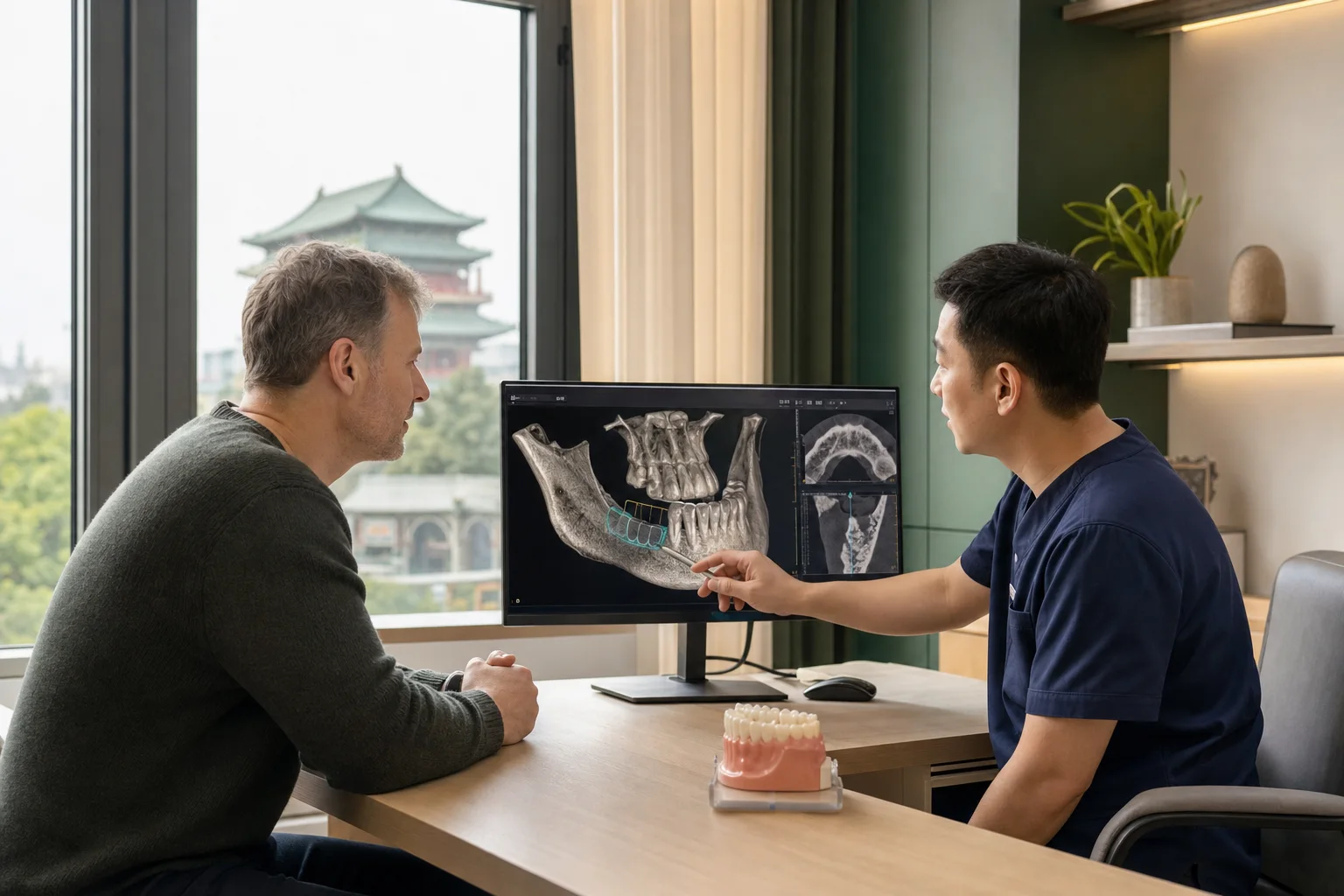
Hearing that “more bone may be needed” can make an implant plan feel uncertain, especially when treatment is being considered abroad. Bone grafting is not a standard add-on and it should not be promised from a single X-ray, a photograph or an online price list. It may be considered when a clinician believes the available jawbone may not provide the support needed for a planned implant and restoration. The right question is not simply whether a graft can be done, but why it may be considered, what alternatives exist, how it changes the sequence and what must still be confirmed in person. Our bone-grafting planning service in China helps international patients organise that conversation before travel, then connects it to a clinician-led assessment in Beijing.
China Dental Implants and Pinnacle Medical China coordinate practical planning for international patients. Licensed partner clinicians remain responsible for imaging review, diagnosis, surgical recommendations, restorative planning, consent, treatment and aftercare. Coordination can help a patient understand what records may be useful and how the proposed stages fit a travel window; it cannot determine whether grafting is necessary, select the graft material or promise an implant date before the treating clinician has examined the patient.
Bone grafting is a clinical decision, not an implant package
Dental implants are placed in the jawbone to support a crown, bridge or denture. When a site may have limited bone volume, the clinician may discuss grafting or another approach as part of a wider restorative plan. The need for this depends on the planned implant position, bone volume and quality, nearby anatomy, the final restoration, gum condition, bite and patient health. Our dental implant service overview explains why planning starts with the final functional goal rather than with a pre-set surgical procedure.
Not every patient with missing teeth needs a graft, and not every site with less bone leads to the same recommendation. A clinician may discuss a different implant position, a shorter or angled implant where appropriate, a different bridge or denture design, preserving a stable space, treatment of gum disease first, or no tooth replacement. The responsible choice depends on the individual examination and the risks, benefits and maintenance requirements of each option.
Who may find this coordinated service useful?
The pathway may be useful for adults who have been told that bone loss, a long-standing missing tooth, an extraction site, a posterior upper-jaw site near the sinus, a failing implant area or a planned multi-tooth restoration may need additional assessment before implants. It can also help patients whose preliminary proposal mentions bone grafting, sinus augmentation or staged implants but does not yet explain what information will confirm the plan.
It is not an emergency service. Severe pain, facial swelling, uncontrolled bleeding, trauma, difficulty breathing or other urgent symptoms require local emergency assessment. Patients should not delay local care for a painful or infected tooth while arranging an international review. A remote discussion can frame questions, but it cannot confirm infection status, bone quality, nerve position, sinus anatomy or suitability for surgery.
Step 1: collect records before discussing a possible graft
Before travel, patients can share recent panoramic imaging or CBCT data if available, extraction and implant history, photographs, previous treatment plans, relevant medical and medication history, and a description of the current concern. Information about smoking or vaping, diabetes, osteoporosis medicines, blood thinners, immune conditions, gum treatment and previous grafting may be important to the clinical discussion. The clinic may still request new imaging and an examination after arrival in Beijing.
Records make the preliminary conversation more useful because they show what is known and what still needs to be checked. They do not replace the assessment. Our guide to records for a Beijing implant review helps patients organise available scans, medical context and treatment questions before they travel.
Step 2: use on-site imaging to test the proposed direction
At the clinic, the treating dentist or surgical team may examine the teeth and gums, review the bite and restorative space, and consider the available bone alongside nearby structures. Digital scans, radiographs or three-dimensional imaging may be recommended depending on the case. The findings may confirm the preliminary direction, change the proposed implant position, introduce preparatory care, make grafting less or more likely, or point to another restorative route.
For posterior upper-jaw sites, the relationship to the sinus can be one of the variables the team considers. For a full-arch plan, bone, bite and the final bridge design are all connected. Our All-on-4 / All-on-6 treatment pathway explains why a full-arch proposal also needs an individual diagnosis rather than an assumed implant count or immediate-loading promise.
Step 3: understand what staging can mean
If grafting is clinically recommended, it may change the sequence of treatment. Some cases may involve a grafting stage before implant placement; in other situations, a clinician may discuss grafting at the time of implant placement. The appropriate route depends on the surgical and restorative findings, the amount and location of bone needed, the planned restoration and the patient’s health context. A patient should never be told that one timing pattern fits every case.
That is why travel should be planned around clinical review rather than a fixed date advertised online. A realistic plan allows time for diagnostics, consent, treatment where appropriate, post-treatment review and any healing period the clinician recommends. Our implant timeline guide explains why surgical and restorative stages may be separated and why the final travel schedule should follow the confirmed plan.
Step 4: ask clear questions about the proposed plan
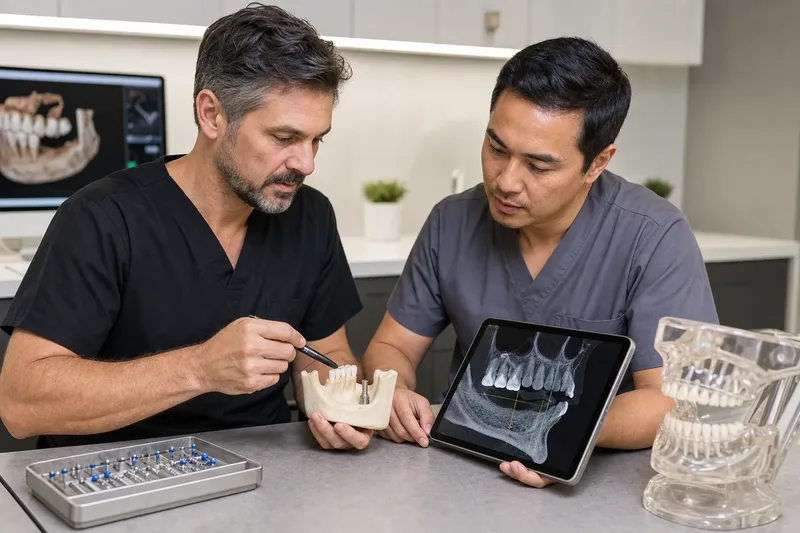
Before consenting, patients should ask the treating clinician what clinical finding supports the recommendation, which teeth or sites are involved, what alternatives were considered, whether the grafting and implant stages are expected to be separate, what may change after surgery and how the planned restoration affects the decision. If a graft or membrane material is proposed, patients can ask what it is, why it was selected and whether there are any product-origin questions they wish to discuss with the clinical team.
Patients should also ask what risks, recovery instructions, dietary guidance, review appointments and warning signs apply to their own plan. The clinical team, not a coordinator or website article, must provide the consent discussion and individual post-treatment advice. A careful discussion is part of a good service, not an obstacle to speed.
Step 5: plan documentation and return-home follow-up
Before leaving Beijing, patients should ask what clinic-issued treatment summary, imaging, implant-system information and follow-up instructions will be provided. If implant treatment is staged, the patient should understand which stage has been completed and what the next decision point is. A local dentist may be important for routine oral-health care and for any urgent issue after the patient returns home.
China Dental Implants and Pinnacle Medical China can help route non-urgent practical questions to the relevant Beijing team and keep the planning sequence clearer. We do not diagnose online, decide whether a graft is necessary, select materials, perform surgery or guarantee how an individual site will heal. Those decisions remain with appropriately licensed treating clinicians.
Start with the information your clinician needs
You do not need to decide in advance whether a graft, sinus procedure or staged implant plan is required. Begin with the missing-tooth area, your available records, your health context and travel constraints. You can request a preliminary implant planning review; the next step is to clarify what can be discussed from records and what must wait for a licensed clinician’s in-person examination in Beijing.
This guide is general information, not a diagnosis or personal treatment recommendation. Seek advice from a licensed dental professional who can examine you.
Related patient guides
Implant-Supported Bridge in China: A Coordinated Service for Several Missing Teeth
See how an implant-supported bridge service in China can move from records and a Beijing assessment to restorative planning, staged care and follow-up.
Read the guide →
Full-Arch Implants in China: A Coordinated All-on-4 / All-on-6 Service
See how a full-arch implant service in China moves from records and Beijing diagnostics to fixed-bridge planning, temporary stages and follow-up.
Read the guide →
What Dental Records Do You Need for Implants in China?
Use this pre-travel checklist to organise imaging, photos, health history and goals before an implant review in China.
Read the guide →
Dental Implant Timeline in China: Why Some Cases Need Two Visits
The travel schedule for implants depends on biology, clinical stages and the final restoration—not only on flight dates.
Read the guide →