
Implant-Supported Bridge in China: A Coordinated Service for Several Missing Teeth
See how an implant-supported bridge service in China can move from records and a Beijing assessment to restorative planning, staged care and follow-up.
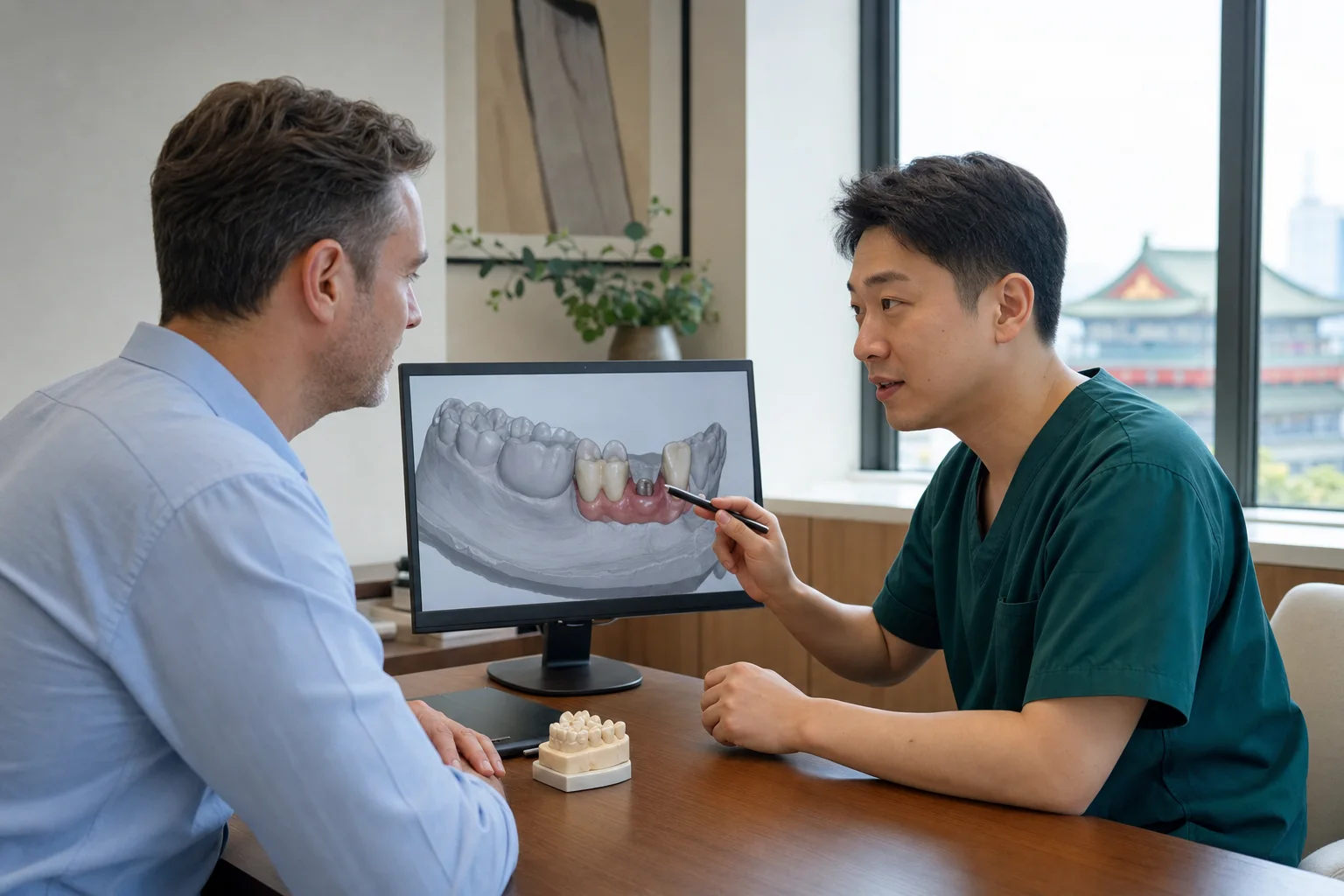
When several teeth are missing in one area of the mouth, an implant-supported bridge may be one way to restore the gap without treating every missing tooth as an isolated project. But “a bridge on implants” is not a fixed product or a one-size-fits-all implant count. The best approach depends on the number and position of missing teeth, the condition of nearby teeth and gums, jawbone, bite, the space for the final restoration, general health and how the patient will maintain it. Our implant-supported bridge service in China helps international patients organise those questions before travel, then connects them to a clinician-led assessment in Beijing.
China Dental Implants and Pinnacle Medical China coordinate patient-facing planning and practical arrangements. Licensed partner clinicians remain responsible for diagnosis, suitability, surgical and restorative recommendations, consent and clinical care. That boundary matters: a coordinator can help a patient understand the likely pathway and prepare records, but cannot decide remotely whether an implant bridge, a conventional bridge, a removable option, a staged plan or no replacement is appropriate.
Several missing teeth do not automatically mean one treatment plan
An implant-supported bridge uses implants to support replacement teeth across a gap. It may be considered when more than one tooth is absent, but it is only one of several ways to manage a missing-tooth space. In some situations, a conventional bridge supported by natural teeth, a removable partial denture, orthodontic movement, retaining a stable space or another restorative option may be discussed. Our dental implant service overview explains why the final restoration, the tissues supporting it and long-term maintenance need to be considered together.
The number of implants is not determined by a formula on a website. Bridge length, bone availability, the opposing teeth, chewing forces, grinding or clenching, the bite, hygiene access and the planned material can all influence the discussion. A responsible clinical team plans the restoration and the implant positions together, rather than promising a certain number of implants before an examination.
Who may find this coordinated service useful?
This pathway may be relevant to adults with two or more missing teeth in a section of the upper or lower jaw, a failing bridge around several teeth, repeated difficulty with a removable partial denture, or a wish to understand whether an implant-supported bridge might be discussed before travelling. It may also help patients who have received a high-level quote without clarity about the restoration, components, staging or follow-up.
It is not an emergency service. Severe pain, facial swelling, trauma, uncontrolled bleeding, difficulty breathing or other urgent symptoms should be assessed locally without delay. An implant bridge is also not automatically the right route for active gum disease, uncontrolled decay, an untreated infection, unstable bite issues or a patient who cannot commit to long-term cleaning and review. Those factors require an in-person clinical conversation.
Step 1: start with records that show the gap and the wider mouth
Before travel, patients can share recent panoramic imaging or CBCT data when available, photographs, any previous treatment plan, a list of existing implants or restorations, relevant medical and medication history, and a clear description of what is difficult now. Details such as tooth loss after injury, failed root-canal treatment, periodontal history, smoking or vaping, diabetes, osteoporosis medicines, blood thinners and grinding may be important to the clinician’s assessment.
Records are useful because they make the early discussion more specific, not because they replace the examination in Beijing. The clinic may need updated scans, radiographs, photographs or models after arrival. Our practical guide to records for a Beijing implant review helps patients identify what they have and what questions to ask if older records are incomplete.
Step 2: let the assessment test the bridge idea
At the clinic, the treating dentist may examine the teeth adjacent to the space, gums, bite and jaw relationship, and review available bone and nearby anatomy. Digital scans, radiographs or three-dimensional imaging may be recommended according to the case. The assessment may support the preliminary direction, change the likely bridge design, introduce preparatory treatment or identify a more suitable alternative.
This is particularly important when a patient has been told online that a bridge will be “fixed” within a certain visit window. The surgical and restorative stages are linked, but they are not interchangeable. Healing, bone grafting where clinically indicated, treatment of gum disease, a temporary solution or a change to the proposed restoration can alter the sequence. Our implant timeline guide explains why some cases need distinct planning, healing and restorative stages rather than a travel promise.
Step 3: plan the final bridge before committing to a surgical route
The visible bridge is the part a patient uses to chew, speak and clean around every day. Before the final treatment route is confirmed, the restorative team may consider the shape and size of the replacement teeth, the bite, the opposing teeth, contact areas, gum support, the amount of restorative space and the ability to clean under or around the bridge. Digital scans, diagnostic models and planned tooth positions can help the patient and team discuss the intended direction.
This restorative-first thinking helps avoid reducing the plan to a scan or an implant brand. The surgeon, restorative dentist and laboratory team may need to work from the same records so the implant positions can support the bridge that is ultimately planned. A digital design improves communication, but it cannot guarantee every detail until the clinician has examined the mouth and confirmed the treatment plan.
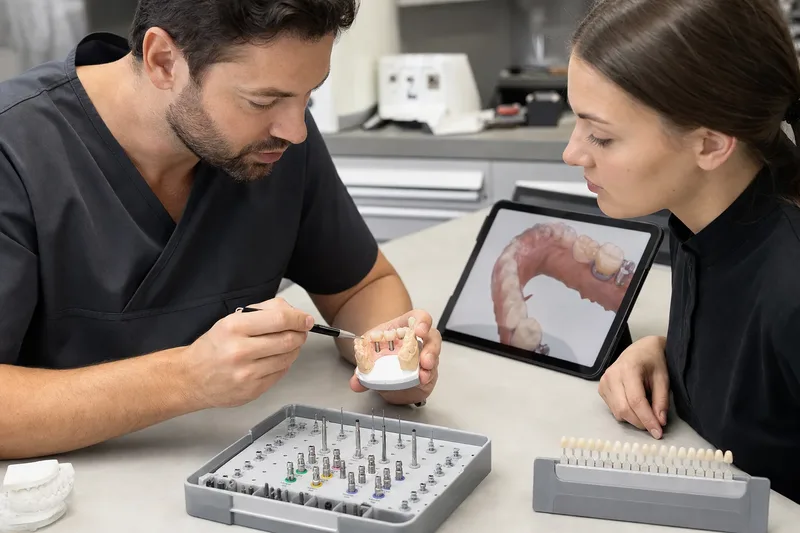
Step 4: understand temporary stages, records and components
Depending on the clinical situation, the dentist may discuss a temporary bridge or another interim solution while healing or restorative work progresses. Not every patient needs the same type of temporary restoration, and not every implant-supported bridge follows the same timetable. The treating clinician should explain what is provisional, what remains to be reviewed and when a definitive bridge may be considered.
Patients should also ask what implant-system, component and restoration records will be provided. These details can be useful for future maintenance or repair after travel. Our article on implant-system and restorative records explains why clear documentation is more valuable than a generic claim about materials.
Step 5: plan follow-up as part of the bridge service
An implant-supported bridge still needs daily cleaning and professional review. The treating clinician may discuss cleaning tools, access beneath the bridge, protective measures where grinding is a concern and the signs that should prompt a local dental visit. Patients should follow their own clinician’s aftercare instructions and keep a local dentist involved in routine oral-health care after returning home.
China Dental Implants and Pinnacle Medical China can help route non-urgent practical questions to the appropriate Beijing team and organise the records surrounding treatment. We do not diagnose online, select an implant system, approve the bridge design or guarantee how a specific case will heal. Clear roles make the service safer and easier to understand for patients travelling from abroad.
Start with the space you need to restore
You do not need to decide in advance how many implants are required or whether a bridge is the correct option. Begin with the teeth you are missing, your available records, any existing bridge or denture, your general health context and travel constraints. You can request a preliminary implant bridge review; the next step is to clarify what can be discussed from records and what must wait for the licensed clinician’s in-person examination in Beijing.
This guide is general information, not a diagnosis or personal treatment recommendation. Seek advice from a licensed dental professional who can examine you.
Related patient guides

What Dental Records Do You Need for Implants in China?
Use this pre-travel checklist to organise imaging, photos, health history and goals before an implant review in China.
Read the guide →
Dental Implant System Records: What Should You Receive?
Good implant documentation can make future maintenance and communication easier after you return home.
Read the guide →
Dental Implant Timeline in China: Why Some Cases Need Two Visits
The travel schedule for implants depends on biology, clinical stages and the final restoration—not only on flight dates.
Read the guide →
How to Compare a Dental Implant Quote in China
A useful dental implant quote explains the treatment sequence, materials, visits and uncertainty—not just a starting number.
Read the guide →