
Porcelain Veneers in China: A Clinician-Led Smile Design Service
See how a porcelain veneer service in China moves from smile goals and records to clinical assessment, design review, ceramics and follow-up.

Choosing porcelain veneers abroad should not begin with a package, a fixed number of teeth or a promise created from one photograph. It should begin with a clear description of what you would like to change and a clinical process that tests whether veneers are an appropriate way to achieve it. Our porcelain veneer service in China is designed to connect those two parts: careful preparation before travel and clinician-led decisions after an in-person examination in Beijing.
The service is coordinated by China Dental Implants and Pinnacle Medical China for international patients. Licensed partner clinicians remain responsible for diagnosis, treatment recommendations, consent and all clinical care. That division of responsibility matters. Coordination should make a dental journey easier to understand; it should never turn an online conversation into a diagnosis.
A smile-design service, not a standard veneer package
Veneers can change the visible shape, proportion, surface texture and colour of selected teeth, but the right design depends on much more than a preferred shade. Tooth position, existing restorations, enamel, gum margins, bite, grinding habits, lip movement and facial proportions all influence what may be appropriate. Our porcelain veneer service overview explains why these variables belong in the same plan.
This is also why we do not present one number of veneers as suitable for everyone. Some patients may need a smaller, carefully selected group of teeth considered. Others may need orthodontic, periodontal or restorative questions addressed before cosmetic treatment. In some cases, veneers may not be the best option at all. The licensed treating dentist makes that determination after examination.
Who may find the service useful?
The pathway may be relevant to adults concerned about visible tooth shape, proportions, discolouration that cannot be managed conservatively, small spaces, selected worn edges or an uneven smile. It is not designed as a shortcut around untreated decay, active gum disease, unstable bite problems or other conditions that need care first.
A useful starting question is not simply “Can I get veneers?” but “What is causing the appearance I want to change, and which options preserve healthy tooth structure?” That framing gives the clinician room to compare veneers with whitening, bonding, orthodontic movement, crowns, gum treatment or no treatment. A promotional image cannot make that comparison for an individual patient.
Step 1: organise goals and records before travel
Early preparation is intended to make the first clinical conversation more focused. Patients can describe which aspects of the smile concern them, what they want to keep natural, whether they grind their teeth and whether they have had orthodontic or cosmetic treatment before. Clear front-facing, side-profile and natural-smile photographs may help communicate the starting point. Existing dental records can also be useful, although the Beijing clinic may require new photographs, scans or imaging.
At this stage, the team can explain what information is missing, identify practical questions and outline a possible appointment sequence. The detailed porcelain veneers and smile design pathway gives patients a treatment-specific checklist before they commit to flights. Any remote discussion remains preliminary.
Step 2: confirm suitability in Beijing
The on-site assessment is where the treating clinician examines the teeth and gums, reviews the bite and checks whether the initial cosmetic goal is compatible with oral health and long-term maintenance. Digital scans, photographs, radiographs or other diagnostics may be recommended according to the clinical findings. The dentist may confirm the broad direction, change the proposed number of teeth, recommend preparatory care or discuss a different option.
International patients should know the proposed clinic and treating setting before treatment begins. Our page about partner clinics in Beijing explains the role of A&S Dental in aesthetic ceramic and smile-design cases and the boundary between patient coordination and licensed clinical care.
Step 3: turn preferences into a reviewable design
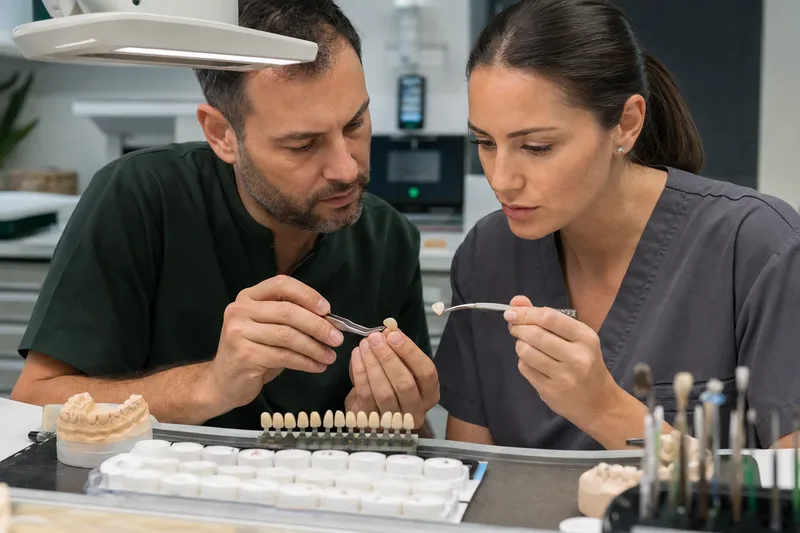
Smile design is a communication process. Photographs, scans and digital planning may help patient and clinician discuss length, width, symmetry, incisal edge position and how the teeth relate to the lips and face. A trial smile, mock-up or provisional stage may help make those decisions more tangible when clinically appropriate.
A digital veneer preview can be useful before or during this conversation, particularly when a patient is trying to express a direction such as softer edges, less visual dominance or a more even smile line. However, a visual preview is not a clinical simulation and cannot show enamel thickness, bite forces, gum response, material limitations or biological risk. It should create better questions, not a guaranteed expectation.
Step 4: review preparation, provisionals and ceramics
If veneers are selected, the dentist explains whether preparation is needed and how tooth structure will be managed. “Minimal preparation” is not a universal promise: it depends on tooth position, enamel, the desired change and the restorative material. Patients should understand which teeth are proposed, why they are included and what alternatives exist before giving consent.
Where a provisional or trial stage is used, it can provide an opportunity to discuss comfort, speech, length and visual balance before final ceramics are completed. Shade, translucency, surface texture and material selection are then considered with the clinical and laboratory team. Our earlier guide to trial smiles, veneer materials and timing explores those technical decisions in more depth.
Step 5: allow time for review rather than rushing to a flight
A veneer journey can include consultation, diagnostics, design discussion, preparation where required, provisional review, laboratory work, try-in, bonding and a post-treatment check. Not every patient follows the same sequence, and the appointment window should be confirmed only after the available information and clinic schedule have been reviewed.
Patients should avoid treating the final appointment as a deadline dictated by a flight. A realistic itinerary leaves room for questions and any review the treating dentist considers necessary. If the plan changes after examination, the patient should have time to understand the new recommendation rather than feeling forced to proceed because accommodation and tickets are already fixed.
What patient-side coordination adds
China Dental Implants and Pinnacle Medical China help organise the information surrounding care. That can include collecting the patient’s stated goals, explaining which records may be useful, identifying the proposed partner clinic, coordinating appointment windows and helping practical questions reach the appropriate team. After treatment, coordination can also help route non-urgent questions back to the clinic.
The coordinator does not select the clinical design, prepare teeth, approve ceramics, diagnose a problem or promise an outcome. Those responsibilities remain with appropriately licensed professionals. Clear roles protect the patient and make the service more credible.
What should be clear before you proceed?
Before treatment, ask for a plain-language explanation of the diagnosis, alternatives, proposed teeth, preparation approach, material direction, expected stages, fees, review timing and aftercare. Ask what could change after the first appointment and what clinic-issued records you will receive. If grinding or another risk factor is present, ask how maintenance or protective measures will be discussed.
The final result depends on clinical findings, design decisions, ceramics, oral health, bite, habits and maintenance. No photograph, preview or website can guarantee how one person will respond. What a well-organised service can provide is a clearer route from initial goals to an informed decision.
Start with the smile you want to understand
You do not need to decide the exact number, shade or material before making contact. Begin with what concerns you, what you hope will remain natural and any records or photographs you already have. You can request a preliminary porcelain veneer review; the next step is to clarify what can be discussed remotely and what must wait for a licensed clinician’s examination in Beijing.
This guide is general information, not a diagnosis or personal treatment recommendation. Seek advice from a licensed dental professional who can examine you.
Related patient guides
Porcelain Veneers in China: Trial Smiles, Materials and Timing
Aesthetic treatment is more reliable when the smile plan, materials, bite and review time are considered together.
Read the guide →
How to Choose a Dental Clinic in Beijing for Implant Treatment
Clinic selection is about the treating team, records, materials, timing and communication—not a marketing claim alone.
Read the guide →
What Happens at an On-Site Dental Assessment in China?
An on-site assessment is where a preliminary idea is checked against examination, imaging and real clinical findings.
Read the guide →
Dental Treatment Follow-Up After You Return Home
Good follow-up starts with records, realistic expectations and knowing when local urgent care is appropriate.
Read the guide →