
Loose Dentures in China: Implant-Supported Denture Planning and Coordination
Explore a clinician-led implant-supported denture planning service in China, from records and Beijing assessment to removable design, maintenance and follow-up.
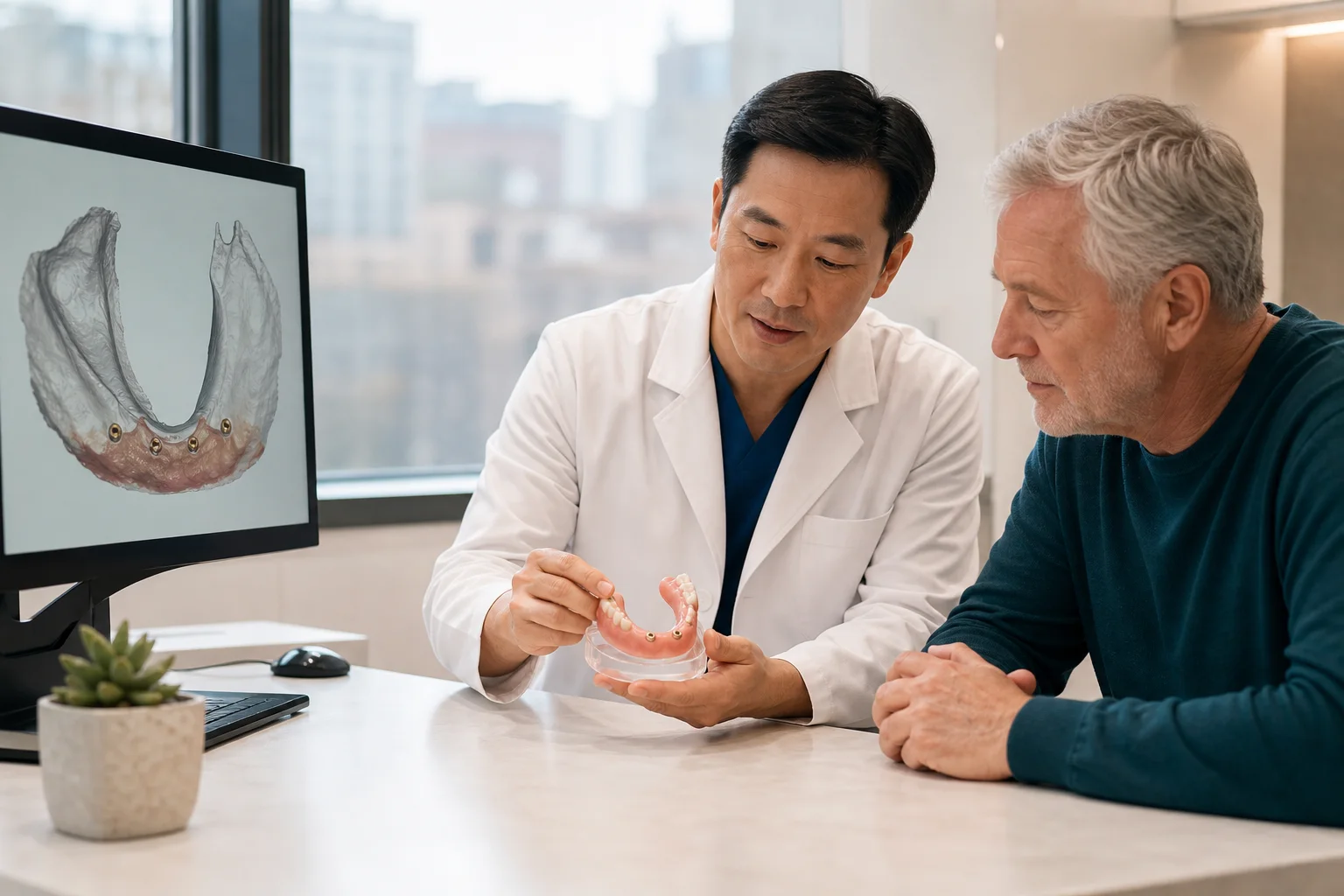
A removable denture can become difficult to manage when it shifts during meals or speech, causes sore spots, feels bulky, or needs repeated adjustment. It is tempting to look for one quick answer, but “make my denture fixed” is not a treatment plan. For some patients, an implant-supported removable denture—often called an overdenture—may be one option to discuss. It remains removable for cleaning, while attachment components can help it engage with implants. Whether that is appropriate depends on the health of the mouth, available bone, bite, existing denture, medical history and the patient’s ability to maintain the result.
China Dental Implants and Pinnacle Medical China coordinate practical planning for international patients who want an implant-supported denture assessment in Beijing. Licensed partner clinicians are responsible for examination, diagnosis, implant and restorative recommendations, consent and clinical care. Our coordination role is to help organise records, appointments and questions before travel. We do not diagnose from photographs, select the number of implants remotely, or promise that an existing denture can be converted.
What an implant-supported denture is—and what it is not
An implant-supported denture is a removable tooth replacement that connects to implants through a clinician-selected attachment design. It is different from a fixed implant bridge, which is not removed by the patient for cleaning. It is also different from an ordinary removable denture that rests entirely on the gums. The possible advantages, limits, retention feel, cleaning routine, repair needs and suitability vary significantly from one person to another.
For someone with a loose lower denture, the clinical conversation may include whether improved retention is a realistic goal, how much support the existing gums and bone provide, and whether a removable design fits their preferences. Our dental implant service overview explains why an implant pathway begins with oral health, restorative planning and a clinician-led assessment rather than a standard package.
Who may find this coordinated service useful?
This pathway may be relevant for adults who already wear a full or partial denture and want to discuss stability, comfort, cleaning access or replacement options with a Beijing clinical team. It can also help patients whose denture has become less stable as the gums and jaw change, who have been told implants may be an option, or who need to compare a new conventional denture, an implant-supported removable denture, a fixed implant restoration or no additional treatment.
It is not an emergency service. Facial swelling, fever, injury, uncontrolled bleeding, a rapidly spreading infection, difficulty breathing or swallowing, or severe uncontrolled pain need prompt local dental or medical care. Do not delay urgent assessment while arranging international treatment. A remote conversation can help identify records that may be useful; it cannot determine infection severity, surgical suitability or the urgency of care.
Start with the denture, the mouth and the health history
Before travel, useful information may include recent dental radiographs or CBCT files where available, photographs of the denture in and out of the mouth, the age and type of the denture, prior extractions or implant treatment, and a short account of movement, rubbing, chewing difficulty or changes in speech. Current medical conditions, medicines, smoking or vaping, diabetes, osteoporosis medicines, past head-and-neck radiotherapy, gum treatment and any previous implant records can affect the questions the treating team needs to ask.
The purpose of record sharing is not to approve treatment from abroad. It helps the clinic understand what must be checked in person and makes the first consultation more useful. Our implant records checklist for a Beijing review explains how imaging, health information and treatment history support early planning without replacing clinical diagnosis.
The Beijing assessment: confirm the foundation before choosing the attachment
At the clinic, the treating dentist may examine the denture-bearing tissues, remaining teeth where present, gum health, bite, jaw relationship and the fit and condition of the current denture. New photographs, digital scans, radiographs or three-dimensional imaging may be recommended according to the case. These findings can change the plan: an existing denture may not be suitable for modification; it may need replacement; preliminary dental or gum care may be needed; or implants may not be the recommended solution.
The clinician also considers the proposed final denture, not only implant placement. Attachment components, denture base design, available vertical space, cleaning access, hand dexterity and the patient’s ability to attend follow-up all affect a removable restoration. A clear plan gives the patient room to understand alternatives and gives the clinician room to recommend a staged route, a conventional denture, a fixed approach, or no intervention when that is safer or more appropriate.
Removable and fixed solutions answer different questions
Patients often ask whether an implant-supported denture is “better” than a fixed full-arch bridge. They are different restorative designs with different maintenance, cleaning, repair and surgical considerations. A removable denture may be chosen when a patient values the ability to remove it for cleaning or when the clinical conditions make that approach more suitable. A fixed option may be discussed in other circumstances, but it should not be assumed from a photograph or an online quote. A fixed full-arch plan also needs separate surgical, restorative and follow-up decisions.
Do not promise a one-visit conversion or a fixed timeline
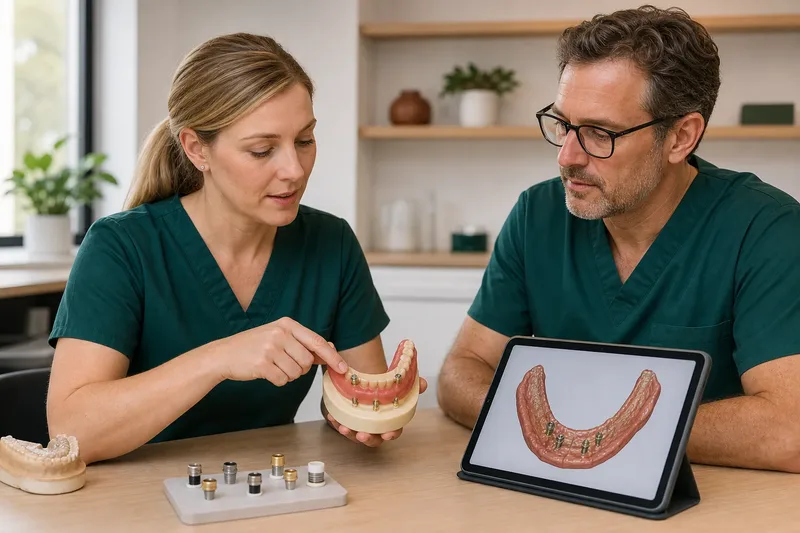
Some patients ask whether their current denture can be adapted to connect to implants. In selected situations, a clinician may discuss modification, but an existing denture can also be unsuitable because of its fit, condition, tooth position, materials or the final bite relationship. Implant surgery, healing and restorative work may be separated into stages. The right sequence depends on clinical findings and cannot safely be set by travel dates alone.
Ask the treating team what stage is being proposed, which decisions remain conditional, whether a temporary or existing denture may be used at any point, and what could cause the plan to change. Our dental implant timeline guide explains why surgical and restorative stages may be distinct, and why travel planning should follow a confirmed clinical pathway.
Maintenance belongs in the original plan
An implant-supported denture is not maintenance-free. Patients should ask how the denture and attachments are cleaned, what routine reviews are recommended, what documents will identify the implant and attachment system, and how a local dentist can be involved after return travel. Components can wear, denture materials can need repair or refurbishment, and gum or bone changes around implants require professional assessment. The treating clinician’s instructions are the primary guide for individual care.
Before leaving Beijing, request a clinic-issued treatment summary, imaging as appropriate, implant-system and attachment information, denture details and written follow-up instructions. Our follow-up after dental treatment in China guide explains why those records help support ongoing care rather than leaving the next clinician to reconstruct the treatment history.
What coordination can help organise
For non-urgent cases, China Dental Implants and Pinnacle Medical China can help gather preliminary records, arrange a Beijing assessment, clarify whether the first visit is a review or a treatment stage, and help patients ask for clinic-issued documentation. We can make the journey easier to understand, but we cannot decide whether implants are suitable, how many should be considered, which attachment design should be used, or whether an existing denture can be retained. Those decisions remain with the licensed treating clinicians after examination and informed consent.
Begin with a review, not a promise
If your denture has become loose or difficult to manage, start by documenting what has changed and collecting the information you already have. You can request an implant-supported denture planning conversation before travel. The next step is to organise an informed assessment in Beijing—not to predetermine a specific implant design, conversion method, final cost or treatment timetable.
This guide is general information, not a diagnosis or personal treatment recommendation. Seek advice from a licensed dental professional who can examine you.
Related patient guides
Full-Arch Implants in China: A Coordinated All-on-4 / All-on-6 Service
See how a full-arch implant service in China moves from records and Beijing diagnostics to fixed-bridge planning, temporary stages and follow-up.
Read the guide →
Dental Treatment Follow-Up After You Return Home
Good follow-up starts with records, realistic expectations and knowing when local urgent care is appropriate.
Read the guide →
What Dental Records Do You Need for Implants in China?
Use this pre-travel checklist to organise imaging, photos, health history and goals before an implant review in China.
Read the guide →
Dental Implant Timeline in China: Why Some Cases Need Two Visits
The travel schedule for implants depends on biology, clinical stages and the final restoration—not only on flight dates.
Read the guide →