
Worn or Chipped Front Teeth: Porcelain Veneer Planning in China
A clinician-led porcelain veneer planning service in China for worn or chipped front teeth, covering tooth structure, bite, trial design and follow-up.
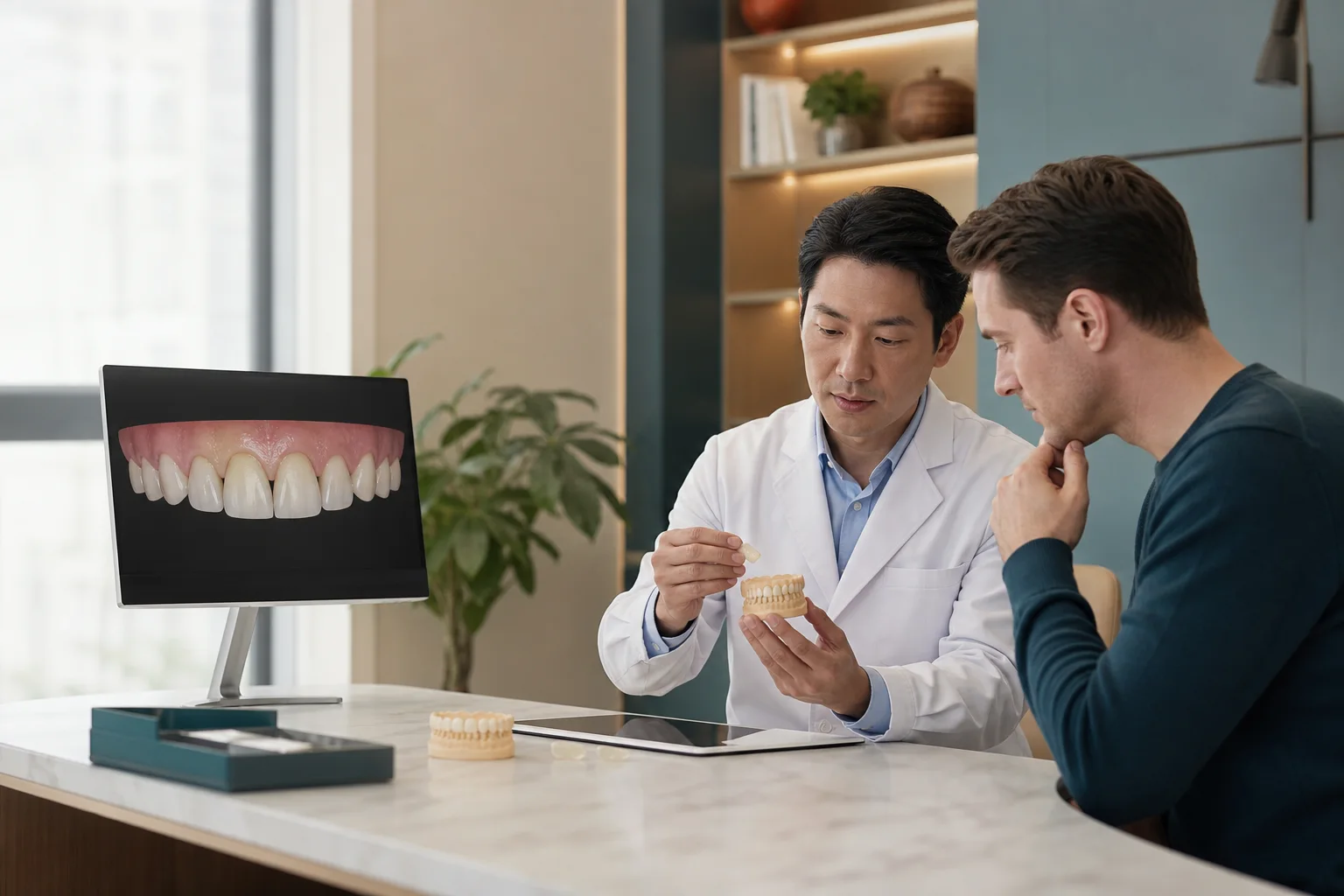
Worn, shortened or chipped front teeth can change the way a smile looks, but the visible edges are only part of the question. Tooth wear may relate to bite forces, clenching or grinding, acid exposure, habits, previous restorations, alignment or a combination of factors. A porcelain veneer can be one option for selected visible teeth, yet it is not a universal answer for every worn edge or cosmetic concern. Before discussing shape, color or how many teeth to treat, the clinician needs to understand the health and amount of remaining tooth structure, gum condition, bite relationship and the patient’s priorities.
China Dental Implants and Pinnacle Medical China coordinate practical planning for international patients considering porcelain veneers in Beijing. Licensed partner clinicians remain responsible for examination, diagnosis, treatment recommendations, tooth preparation, consent and clinical care. Our role is to help organise records, appointments and questions before travel. We do not decide from a smile photograph that veneers are suitable, promise a no-preparation approach, or guarantee a final cosmetic result.
When worn or chipped teeth need more than a color change
Patients may notice front teeth that look flatter, uneven, translucent, shorter than before, or prone to small chips. Sometimes a patient mainly wants a more harmonious smile; in other cases, sensitivity, repeated edge repairs, a changed bite or an existing restoration may be part of the story. The same appearance can have different causes, so the correct approach can range from monitoring and preventive advice to composite repair, a crown, orthodontic planning, bite management, porcelain veneers or a broader restorative plan.
Porcelain veneers cover the visible front surface of selected teeth rather than the entire tooth. They can be considered for certain changes in shape, color or minor edge appearance, but healthy teeth and gums still matter. Our porcelain veneer service overview explains why a smile plan starts with an assessment of enamel, gum health, alignment and bite—not a fixed package of teeth or a copied celebrity smile.
Who may find this service useful?
This bite-aware planning pathway may be useful for adults with worn or chipped visible front teeth, repeated small composite edge repairs, uneven tooth proportions, old discoloration, or a smile concern that seems connected to the way their teeth meet. It can also help patients who have been offered veneers elsewhere and want a clinician-led discussion of alternatives before they make travel plans.
A remote review does not replace urgent local care. New facial swelling, severe or rapidly worsening pain, trauma, uncontrolled bleeding, a loose tooth, difficulty breathing or swallowing, or a suspected infection needs prompt local dental or medical assessment. Do not delay emergency treatment to arrange an international cosmetic consultation. Images can help a clinic prepare questions, but they cannot establish the health of a tooth or the urgency of a problem.
Start with the dental history, not only a front-facing photo
Clear face, smile and close-up tooth photographs are useful for communication, but they do not show enamel thickness, cracks, gum condition, decay, the roots or how the teeth meet. Before travel, patients can share recent radiographs where available, photographs from several angles, information about grinding or jaw symptoms, a history of orthodontic, whitening, bonding, crown or root-canal treatment, and any recent changes in bite or tooth sensitivity. Medical history, current medicines, smoking or vaping and travel constraints can also affect the clinical discussion.
These records help the Beijing clinical team decide what to examine; they do not confirm a veneer plan in advance. Our trial smiles and porcelain veneer materials guide explains how mock-ups and material discussions can support communication while leaving diagnosis and personal suitability to the treating clinician.
The Beijing assessment: protect the foundation before designing the surface
At the clinic, the treating dentist may examine tooth structure, existing fillings or restorations, gum health, tooth position, bite contacts, jaw movement and the condition of the teeth that would remain untreated. Digital scans, photographs, radiographs and diagnostic models may be recommended according to the case. The assessment may show that a veneer is reasonable for some teeth, that a different restoration would protect a tooth more appropriately, that bite or gum care should come first, or that a conservative repair or monitoring is a better choice.
For patients with clenching, grinding, deep bite relationships or substantial wear, the clinician may need to discuss how those forces affect any proposed restoration. A visually attractive design that ignores the bite can be difficult to maintain. A careful assessment gives the clinician room to recommend a more limited plan, staged care, a protective appliance where appropriate, or a different restorative route rather than treating every visible concern with veneers.
Trial design is a communication tool, not a treatment promise
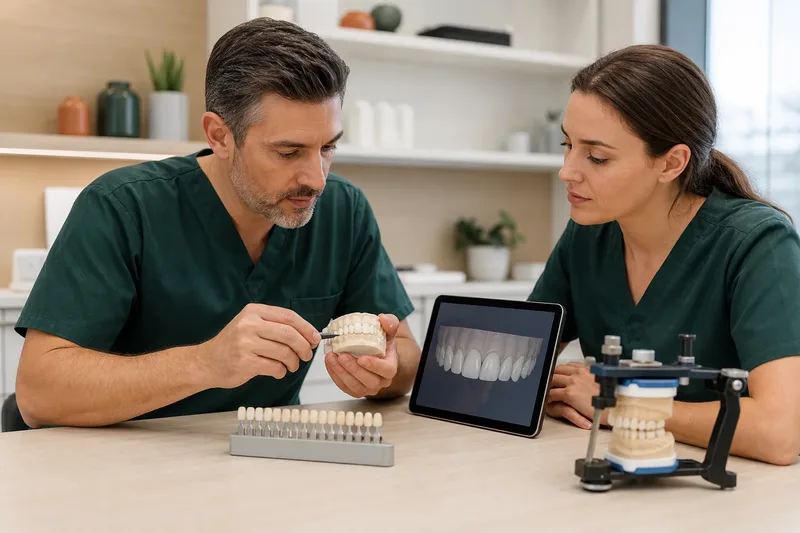
Digital planning, wax-ups and temporary mock-ups can help patients and clinicians discuss tooth proportions, edge length, smile line, shade direction and how the teeth may look in context. They are valuable because a patient can react to a proposed direction before final ceramics are made. They do not establish whether enamel can be preserved, whether a chosen shape will work with the bite, or what final result is possible after clinical preparation and laboratory steps.
Ask what the trial design is intended to show, what may change after examination, and whether the proposed smile requires changes to the bite, tooth position or other teeth. If a patient already has veneers that have chipped, become mismatched or no longer suit the smile, prior records, remaining tooth structure and the reason for replacement still matter before a new restoration is chosen.
Compare conservative options honestly
A service focused on veneers should still make room for alternatives. Depending on the diagnosis, the treating dentist may discuss monitoring, polishing, composite bonding, whitening, orthodontic input, a crown, treatment for tooth disease or no cosmetic treatment. Composite can be an option in selected cases and may be easier to adjust or repair, while porcelain veneers have their own preparation, laboratory and maintenance considerations. The choice is not simply porcelain versus “inferior”; it is about what protects and suits each tooth in the wider mouth.
For patients whose smile concerns sit alongside an older crown, bridge or repeatedly failing restoration, the underlying structural question may need attention before a cosmetic surface plan. Our restorative review guide for failing crowns and bridges describes why support teeth, gum health and final design should be assessed before a replacement decision is made.
Plan travel around confirmed clinical stages
Veneer treatment may involve records review, an in-person assessment, diagnostic design, preparation where appropriate, a temporary stage, laboratory work, fit review and follow-up. The exact sequence depends on the diagnosis and planned restoration. A flight schedule, online quotation or trial image cannot safely decide the number of visits, whether teeth will be prepared, or when a final ceramic restoration can be fitted.
Patients should ask which stage is being proposed, what is conditional on the first examination, what documents will be provided, and what local follow-up may be needed after travel. Our follow-up after dental treatment in China guide explains why clinic-issued records and clear aftercare instructions matter once a patient returns home.
What coordination can help organise
For non-urgent cases, China Dental Implants and Pinnacle Medical China can help gather preliminary images and dental history, arrange a Beijing review, clarify what information may be useful before the appointment and help patients request clinic-issued documentation. We can help make the planning process easier to understand, but we cannot diagnose worn teeth online, prescribe treatment, decide that veneers are suitable or guarantee a cosmetic outcome. Those decisions belong to the licensed treating clinicians after examination and informed consent.
Begin with an assessment that respects the tooth
If worn or chipped front teeth are affecting how you feel about your smile, begin by recording what has changed and gathering the information you already have. You can request a porcelain veneer planning conversation before travel. The next step is an informed Beijing assessment—not a promise of a fixed design, veneer count, preparation method, price or treatment timetable.
This guide is general information, not a diagnosis or personal treatment recommendation. Seek advice from a licensed dental professional who can examine you.
Related patient guides
Porcelain Veneers in China: Trial Smiles, Materials and Timing
Aesthetic treatment is more reliable when the smile plan, materials, bite and review time are considered together.
Read the guide →
Porcelain Veneers in China: A Clinician-Led Smile Design Service
See how a porcelain veneer service in China moves from smile goals and records to clinical assessment, design review, ceramics and follow-up.
Read the guide →
Replacing Porcelain Veneers in China: A Coordinated Smile Refresh Service
Understand how a porcelain veneer renewal service in China can move from existing records and a Beijing assessment to an individual ceramic and follow-up plan.
Read the guide →
When an Old Crown or Bridge Fails: Restorative Review and Replacement Planning in China
A clinician-led restorative review service in China for patients with a failing crown or bridge, covering records, options, final design and follow-up.
Read the guide →