
Replacing Porcelain Veneers in China: A Coordinated Smile Refresh Service
Understand how a porcelain veneer renewal service in China can move from existing records and a Beijing assessment to an individual ceramic and follow-up plan.
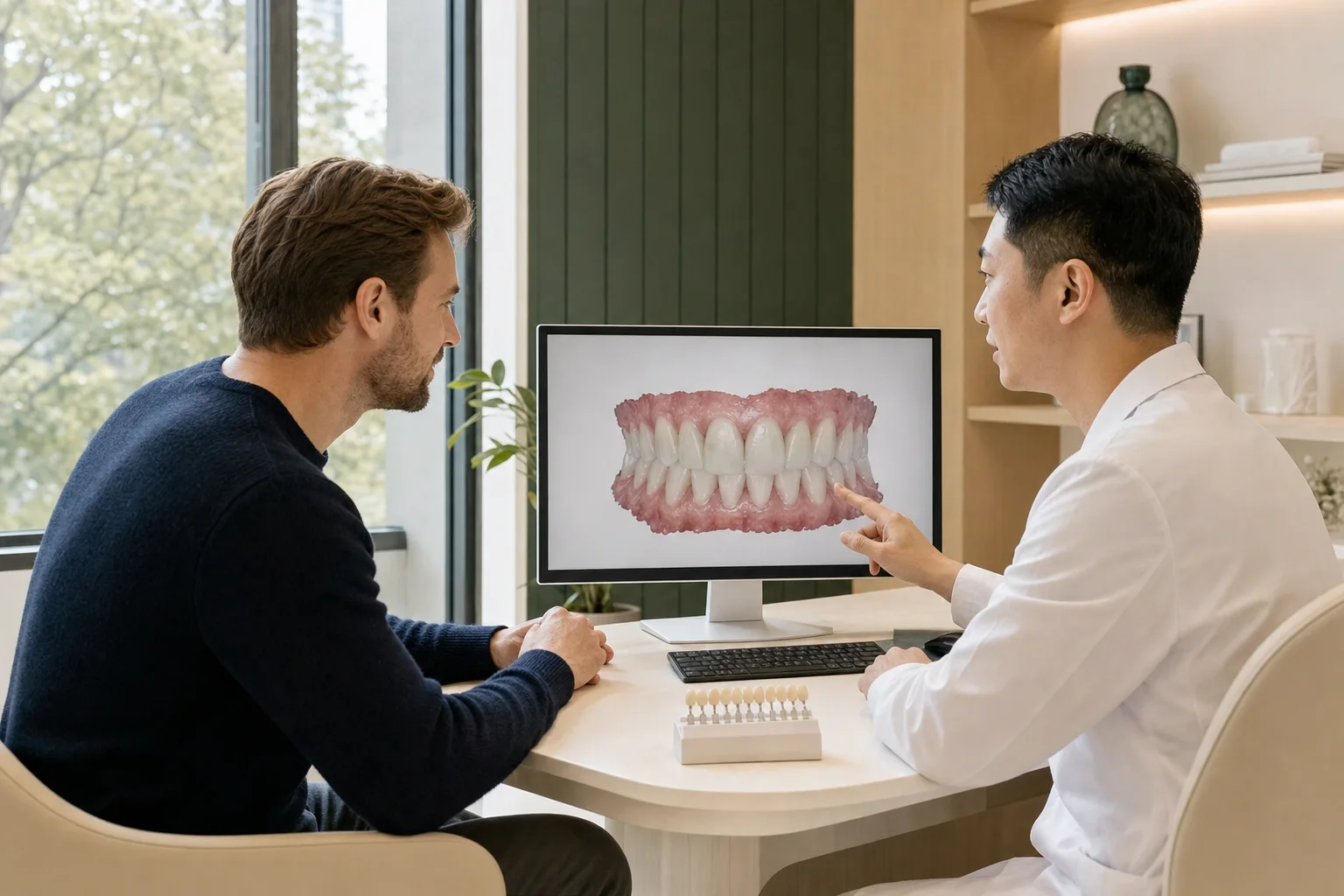
Replacing existing porcelain veneers is not simply a matter of choosing a brighter shade and booking a short cosmetic appointment. A veneer may need attention because its edge has chipped, its colour no longer sits well with neighbouring teeth, a margin has become noticeable, the bite feels different, or the patient wants to understand a broader smile change. Those visible concerns can have different causes, and the appropriate response may be renewal, repair, monitoring, a change to the proposed design or another treatment altogether. Our veneer renewal service in China helps international patients organise that conversation before travel, then connects it to a clinician-led assessment in Beijing.
China Dental Implants and Pinnacle Medical China coordinate practical planning for international patients. Licensed partner clinicians remain responsible for examination, diagnosis, treatment alternatives, consent, clinical procedures and aftercare instructions. The coordinator can help patients gather useful information and understand the likely decision points, but cannot decide from photos whether an existing veneer should be replaced or how many teeth should be included.
A smile refresh is not a standard replacement package
Porcelain veneers cover the visible front surface of selected teeth. They are different from crowns, and the work needed to assess an existing veneer can be different from the work needed to place a first veneer. The clinician may need to understand the original restorations, the tooth structure beneath or around them, the gums, the bite, adjacent teeth and the patient’s habits before discussing a new ceramic plan. Our porcelain veneer service overview explains why healthy teeth, gum condition, enamel and function belong in the same discussion as appearance.
For some people, a small targeted change may be discussed. For others, matching a new veneer to neighbouring natural teeth or older ceramics may be the bigger issue. It is also possible that replacing a veneer is not the most conservative answer to the concern. Whitening, bonding, periodontal care, bite management, a crown, orthodontic movement or simply leaving a stable restoration alone may be considered, depending on the individual findings. A responsible service leaves room for the dentist to make that comparison.
Who may find this coordinated service useful?
The pathway may be helpful for adults who already have one or more veneers and want a clinician to assess a planned renewal, a visible mismatch, a changed smile preference, a chipped or worn-looking restoration, or a larger refresh involving selected front teeth. It can also help a patient who has received different opinions and wants to make sure a proposed number of veneers, material choice and travel window are discussed in a coherent way.
It is not an emergency service. Severe pain, facial swelling, trauma, uncontrolled bleeding, difficulty breathing or other urgent symptoms require local emergency assessment. A veneer that feels loose, painful or suddenly changes the bite should also be assessed promptly by a local dental professional rather than managed through an online discussion. Remote photos may support communication, but they cannot confirm the health of the underlying tooth or determine why a restoration has changed.
Step 1: collect the story of the existing veneers
Before travel, patients can share the date the veneers were placed, any available treatment records, the number and location of teeth involved, material or laboratory information if known, recent radiographs or scans, photographs and a description of what has changed. It is useful to say whether there has been grinding or clenching, a sports injury, orthodontic movement, gum treatment, tooth sensitivity, repeated bonding repairs or a change in the way the teeth meet.
Patients do not need perfect documentation. Many people no longer have the original records. The value of preparation is that it makes gaps visible early and helps the Beijing clinic explain what may still need to be checked in person. Our detailed porcelain veneers and smile design pathway is useful for understanding what a clinical assessment, design conversation and ceramic review can involve before a final decision is made.
Step 2: let the in-person assessment set the direction
At the clinic, the treating dentist may examine the existing restorations, the tooth surfaces and gums around them, the bite and the relationship between the planned teeth and the rest of the smile. Updated photographs, digital scans, radiographs or other diagnostics may be recommended depending on the concern. The assessment may confirm that a veneer renewal is reasonable, reduce or expand the proposed scope, suggest preparatory treatment or point to a different option.
This step matters particularly for patients who are travelling. A consultation held after flights are booked should not become pressure to proceed with the first idea. The plan should stay adjustable if the clinician finds decay, gum disease, a bite issue, a damaged tooth, limited restorative space or another factor that changes the balance of options. Our earlier clinician-led porcelain veneer service guide explains the division between patient coordination and clinical responsibility in more detail.
Step 3: agree what “better” means before new ceramics are made
A successful refresh is not defined only by a lighter shade. The patient and clinical team may need to discuss proportions, surface texture, translucency, incisal edges, symmetry, the appearance of neighbouring teeth, lip movement and how the new work should relate to the existing bite. If only some veneers are renewed, the practical question is often how the new ceramics will relate to what remains. If several front teeth are being reconsidered, the conversation may be broader.
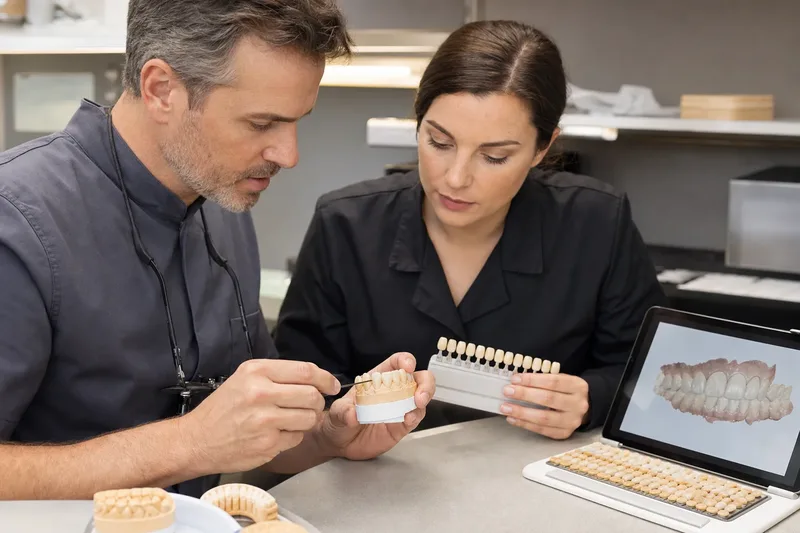
Digital scans, photographs, diagnostic models, a wax-up, mock-up or provisional stage can make this discussion more concrete when clinically appropriate. They are communication aids, not a guarantee of a final result. A trial may reveal that a proposed length, shape or shade needs further discussion, and the dentist may recommend a more conservative direction. For a closer look at this kind of planning, read our guide to trial smiles, veneer materials and timing.
Step 4: plan the ceramic and review stages around the actual case
If the treating clinician recommends replacing a veneer, the sequence may include removing or adjusting the old restoration, checking the tooth, preparing the tooth only as needed, capturing the records for a new ceramic, using a provisional where appropriate, reviewing fit and design, and bonding the final veneer. The precise stages depend on the current restoration, the health and position of the tooth, the material selected and the number of teeth involved. No two veneer renewals should be assumed to follow exactly the same itinerary.
Patients should ask which teeth are proposed, what is known versus what will be checked after the old restoration is assessed, whether a provisional or trial stage is likely, what review opportunities are planned, and what could change the schedule. The goal is not to create anxiety around the unknown; it is to make the decision points visible before a travel booking becomes a deadline.
Step 5: include return-home care in the service plan
New or renewed veneers still need everyday care and professional review. The treating clinician may discuss cleaning around the margins, avoiding habits that place excessive force on restorations, protective measures when grinding is a concern and when to seek assessment if a veneer chips, loosens or changes the bite. Patients should follow the treating clinician’s instructions and keep a local dentist involved for regular oral-health care after returning home.
Before departure, ask what clinic-issued records will be provided, including the treatment summary, material information where applicable, photographs or scans that the clinic considers appropriate, and clear instructions for routine follow-up. China Dental Implants and Pinnacle Medical China can help route non-urgent practical questions to the relevant Beijing team, but the treating clinician remains the source for clinical advice.
Start with the restorations you already have
There is no need to decide from a photograph whether one veneer, several veneers or no new ceramics are the right answer. Begin with what you have noticed, the records you can locate and the features you want to preserve. You can request a preliminary veneer renewal review; the next step is to clarify what can be discussed from your records and what must wait for the licensed clinician’s in-person examination in Beijing.
This guide is general information, not a diagnosis or personal treatment recommendation. Seek advice from a licensed dental professional who can examine you.
Related patient guides

Porcelain Veneers in China: A Clinician-Led Smile Design Service
See how a porcelain veneer service in China moves from smile goals and records to clinical assessment, design review, ceramics and follow-up.
Read the guide →
Porcelain Veneers in China: Trial Smiles, Materials and Timing
Aesthetic treatment is more reliable when the smile plan, materials, bite and review time are considered together.
Read the guide →
What Happens at an On-Site Dental Assessment in China?
An on-site assessment is where a preliminary idea is checked against examination, imaging and real clinical findings.
Read the guide →
Dental Treatment Follow-Up After You Return Home
Good follow-up starts with records, realistic expectations and knowing when local urgent care is appropriate.
Read the guide →