
Porcelain Veneer Shade Matching in China: Plan Your Smile Colour
A practical guide to coordinating veneer shade discussions in China, including existing crowns, whitening questions, reference photographs and the review before bonding.
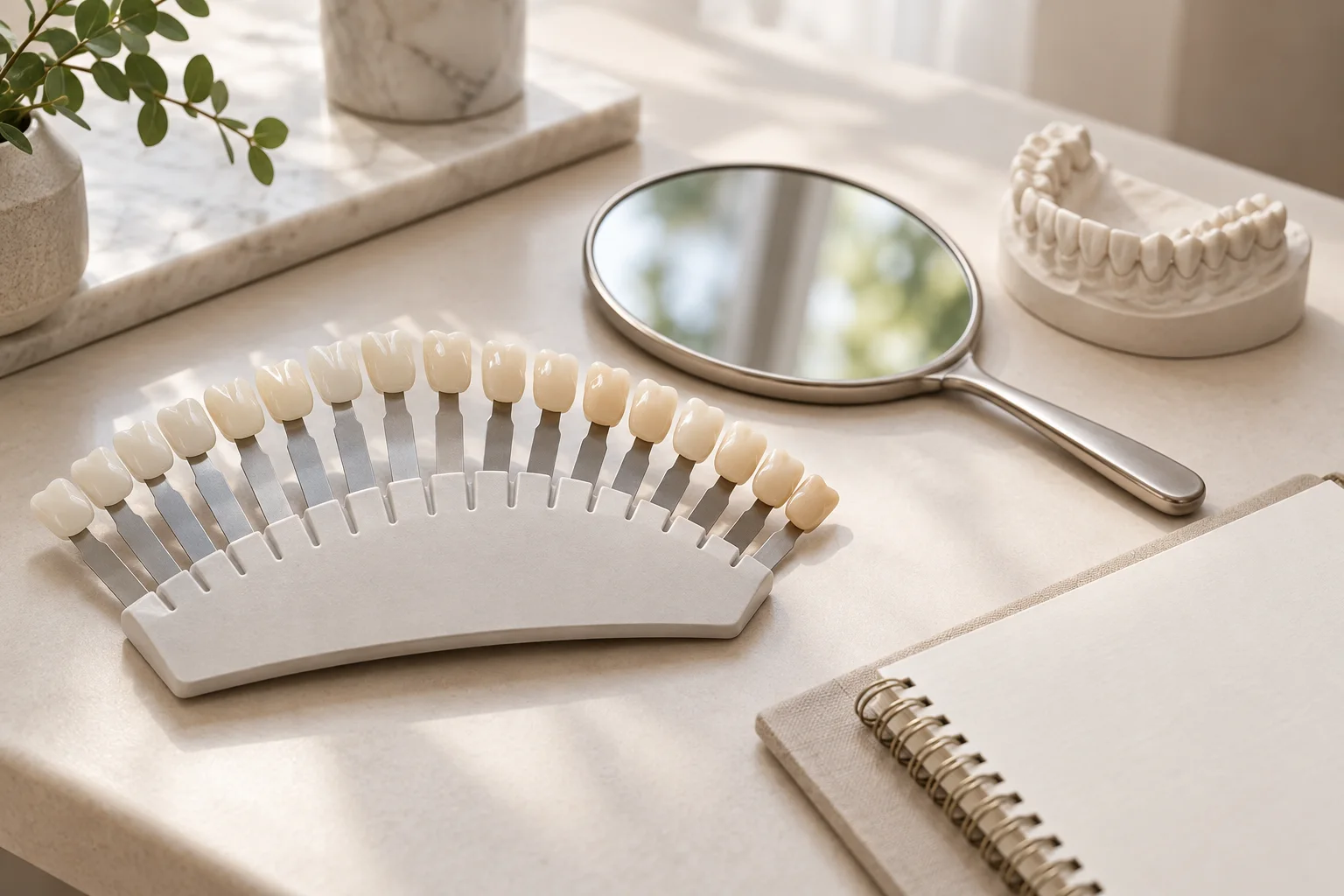
Images in this guide are AI-generated service illustrations, not photographs of our clinicians, patients or treatment results.
“I want a brighter smile, but I still want it to look like me.” That is a useful starting point for a porcelain veneer consultation. It becomes a more complicated request when some teeth have crowns, others have old fillings, or the patient is considering whitening as well. Before choosing a shade, the dental team needs to understand which teeth are natural, which are restored and what the patient hopes to change.
China Dental Implants supports international patients considering porcelain veneer care in China, with practical coordination through Pinnacle Medical China and licensed partner clinics in Beijing. This guide focuses on preparing the colour discussion: gathering relevant information, putting expectations into words and leaving time for the treating dentist to explain the available options. The dentist makes clinical decisions; coordination helps keep the questions and appointments organised.
Begin with a colour brief you can explain
Instead of arriving with only a shade code, describe what you notice in everyday life. Perhaps one front tooth looks darker in photographs, an older crown stands out, or the upper teeth look different from the lower teeth. Tell the team whether you want a subtle change or a noticeably brighter appearance, and which features of your current smile you would like to keep.
Our porcelain veneer service introduces the wider assessment. A colour brief is one part of it. Tooth condition, gums, bite and the extent of any proposed preparation also need discussion before a cosmetic decision.
Separate natural teeth from existing restorations
Whitening does not change the colour of crowns, veneers or fillings. That matters when a smile contains both natural teeth and restorations: changing the natural teeth may make an existing restoration more noticeable. Ask the dentist whether whitening is relevant, how its timing would fit the proposed veneer work, and when the final colour should be assessed. Do not assume that whitening after veneers are fitted will make every tooth match.
Bring a simple list of existing crowns, veneers and visible fillings, even if you do not know their materials. Old treatment records can help. If you cannot identify a restoration, say so; the examination is the place to clarify it. A dark tooth, a new colour change or a tooth with symptoms also needs clinical assessment before being treated as a purely cosmetic concern.
Ask what problem each option would solve
Porcelain veneers cover the front surfaces of teeth and can change their appearance. They involve a long-term commitment: enamel removal is irreversible, and veneers may eventually need repair or replacement. Decay or gum disease needs attention before veneers are placed. These points should be part of the decision even when the original concern is colour.
Depending on the findings, the dentist may discuss whitening, bonding, veneers, care for an existing restoration, or leaving healthy teeth unchanged. Ask why an option is being proposed for each tooth. A request for a brighter smile does not itself establish how many teeth should receive veneers. The recommendation should be explained in terms you understand, including its limitations and future care.
Use photographs to communicate preferences
For the preliminary conversation, provide recent, unfiltered photographs where possible, alongside a short description of what concerns you. Include a relaxed smile and a wider smile if comfortable. Tell the coordinator if the image was edited or taken under strongly coloured lighting. Reference photographs can explain a preference, but a phone display cannot establish an exact clinical shade or predict your result.
A helpful note might read: “I like the overall brightness in this reference, but I want to retain the shape of my central teeth.” That gives the clinician a clearer question than “copy this smile.” Our guide to trial smiles and veneer materials explains the role of previews in a planning conversation. Ask what a proposed preview can demonstrate and what will still require review with the actual restoration.
What to discuss with the dentist and laboratory
Porcelain veneer treatment generally includes tooth preparation, impressions or a digital scan, laboratory fabrication and a check of fit and shape before bonding. Ask how your preferences will be recorded and passed to the laboratory, which teeth the dentist intends to match, and how existing restorations will be taken into account. A shade name is useful information, but it does not describe every aspect of the appearance you are requesting.
Prepare a short set of priorities for the appointment: the desired overall brightness, features you want to preserve, the restoration that bothers you most and any concern about the teeth looking too uniform. Ask the dentist to explain which preferences are feasible. Confirm whether there will be an opportunity to review the proposed appearance before final bonding and what happens if further work is needed.
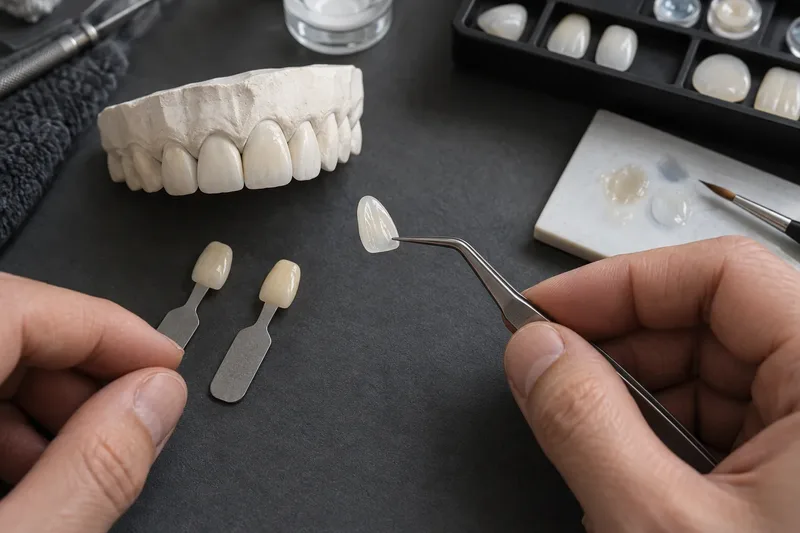
Illustrative ceramic planning workspace generated with AI; no clinical result is depicted.
Leave time for a decision before final bonding
International travel can make patients feel pressure to accept work quickly. When appointments are discussed, ask which visit covers assessment, which steps depend on laboratory work, and how review or changes would affect the schedule. Confirm the clinic's process for discussing concerns before bonding. Do not treat a departure date as confirmation that every clinical and laboratory step can be completed by then.
For example, someone with an older front crown and natural neighbouring teeth may need a different discussion from someone seeking a small colour change across unrestored teeth. These are planning examples, not patient cases or prescribed solutions. The purpose is to identify the questions that affect the pathway before booking around an assumed number of appointments.
What coordination can help you organise
Start with your priorities, available dental records and preferred travel window. We can help organise the initial enquiry and appointment discussion with the Beijing team. Ask for confirmation of the proposed clinic, consultation arrangements and which services are included in the quote. Clinical suitability, tooth preparation, material selection, shade decisions and treatment consent remain with the licensed treating dentist.
When reviewing a quote, ask whether it covers temporary restorations if needed, laboratory work, the review appointment and any agreed changes. Request an explanation of possible additional costs rather than assuming every adjustment or replacement is included. Keep the written plan and clinic contact details with your travel documents.
Keep colour records and aftercare information
At completion, ask for a treatment summary identifying the treated teeth and the restoration details the clinic can provide. Record any follow-up instructions and the contact route for concerns after returning home. Our dental follow-up guide helps you prepare that handover. Photos and shade information may support future conversations, but a future repair or replacement still requires assessment.
To begin, request a veneer planning conversation and tell us what you want to change, whether you have existing crowns or veneers, and whether whitening is part of your question. Those details help make the first consultation relevant to your smile.
Patient information sources
Clinical background was checked against the American Dental Association's patient information on veneers and teeth whitening. This editorial guide is general information and has not received an individual clinician's review.
This guide is general information, not a diagnosis or personal treatment recommendation. Seek advice from a licensed dental professional who can examine you.
Related patient guides

Porcelain Veneers in China: A Clinician-Led Smile Design Service
See how a porcelain veneer service in China moves from smile goals and records to clinical assessment, design review, ceramics and follow-up.
Read the guide →
Replacing Porcelain Veneers in China: A Coordinated Smile Refresh Service
Understand how a porcelain veneer renewal service in China can move from existing records and a Beijing assessment to an individual ceramic and follow-up plan.
Read the guide →
Porcelain Veneers in China: Trial Smiles, Materials and Timing
Aesthetic treatment is more reliable when the smile plan, materials, bite and review time are considered together.
Read the guide →
Gum Health Before Implants or Veneers in China: Planning and Coordination
Understand why gum health, hygiene access and periodontal assessment matter before implant or veneer planning in China, with clinician-led options and follow-up coordination.
Read the guide →