
Gum Health Before Implants or Veneers in China: Planning and Coordination
Understand why gum health, hygiene access and periodontal assessment matter before implant or veneer planning in China, with clinician-led options and follow-up coordination.

A dental implant or porcelain veneer plan should begin with more than the visible tooth. The gums frame a smile, protect the tissues around teeth and implants, and affect how easy a final restoration will be to clean. If gums bleed, are swollen, receding, uncomfortable, or have not been assessed for some time, those findings can change the safest sequence of care. A thoughtful plan may begin with diagnosis, hygiene support or periodontal treatment before a final implant or veneer decision is made.
China Dental Implants and Pinnacle Medical China coordinate practical planning for international patients considering implant or veneer assessment in Beijing. Licensed partner clinicians are responsible for examination, periodontal assessment, diagnosis, treatment recommendations, consent and clinical care. We help patients organise records, appointment logistics and non-urgent questions before travel. We do not diagnose gum disease from photographs, prescribe a treatment sequence remotely, or promise that an implant or cosmetic veneer can proceed on a fixed travel date.
Why gum health belongs at the start of a restorative plan
Healthy-looking teeth do not always tell the whole story. The treating clinician may need to examine gum colour and contour, bleeding, plaque and calculus, pocketing, recession, tooth mobility, bone support, existing restorations and the way the teeth meet. Medical history, smoking or vaping, diabetes management, past gum treatment and daily cleaning habits can also be relevant. The purpose is not to create a barrier to treatment; it is to understand the condition being treated and the maintenance that a future restoration will require.
For patients considering a missing-tooth replacement, our dental implant service overview explains why an implant includes the supporting tissues and the final crown or bridge, not only the implant component. A restoration should be planned so the patient and their dental team can monitor and clean it over time.
Implants: the site and the whole mouth both matter
An implant assessment may consider available bone and gum tissue at the proposed site, but it should not ignore the rest of the mouth. Active periodontal concerns, untreated decay, an unstable bite, difficult plaque control or a failing neighbouring tooth can affect the order in which treatment is discussed. In some cases, the clinician may advise controlling periodontal disease or completing other dental care before implant placement is considered. In others, the assessment may show that an implant is not the preferred option.
This does not mean every patient needs the same periodontal procedure. It means the sequence should follow the findings. A clinician may discuss oral-hygiene support, non-surgical periodontal treatment, review after treatment, adjustment of an existing restoration, extraction planning, a bridge or a removable alternative. The right route is case-specific and requires an in-person examination and informed consent.
Veneers: a cosmetic goal still needs a healthy foundation
Porcelain veneers are planned around tooth structure, shade, shape, bite and smile proportions, but the gum margin is part of the visible result as well. If there is inflammation, recession, uneven contours, an old restoration that irritates the gums, or a need to improve daily cleaning, the clinician may recommend resolving or stabilising those issues before final cosmetic work. A veneer should not be used to conceal an untreated periodontal problem.
Our porcelain veneer and smile-design service describes the restorative side of veneer planning. The final design should also leave realistic access for hygiene and future review. If the gums or bite alter the original cosmetic idea, the clinical team should explain the trade-offs rather than force a pre-set number of veneers or a promised shade.
Who may find this coordinated service useful?
This pathway may help adults who are considering implants or veneers and have bleeding gums, persistent bad breath, gum recession, loose teeth, old crowns or bridges near the planned area, a history of gum disease, or uncertainty about whether a smile concern is cosmetic, periodontal or both. It can also be useful for patients who have been quoted for treatment without a recent comprehensive gum assessment and want to prepare better questions before travel.
It is not emergency care. Rapidly worsening swelling, fever, uncontrolled bleeding, severe pain, trauma, difficulty breathing or swallowing, or a suspected spreading infection requires prompt local dental or medical assessment. Do not delay urgent care while arranging international treatment. Remote coordination cannot determine the severity of an acute gum or dental infection.
Records that make the first conversation more useful
Before travel, patients can share recent X-rays or CBCT files where available, photographs of the smile and gums, a periodontal chart or hygiene notes if available, past implant or veneer records, the history of bleeding or recession, and details of previous gum treatment. Please also share medical history, regular medicines, allergies, smoking or vaping status and diabetes information where relevant. These records can focus questions; they do not replace diagnosis.
Our dental records checklist for China gives a practical way to collect imaging, dental history and health information before an implant review. It is equally useful when the first question is whether periodontal health needs attention before a restorative decision.
At the Beijing assessment: make the maintenance plan visible
The treating team may examine the gums and teeth, evaluate hygiene access, review imaging, check the bite and assess the condition of existing restorations. They may recommend new scans, photographs, periodontal measurements or other tests according to the case. The conclusions may refine the initial request: an implant or veneer may remain appropriate, the plan may need to be staged, an existing problem may need care first, or a different restorative option may be more suitable.
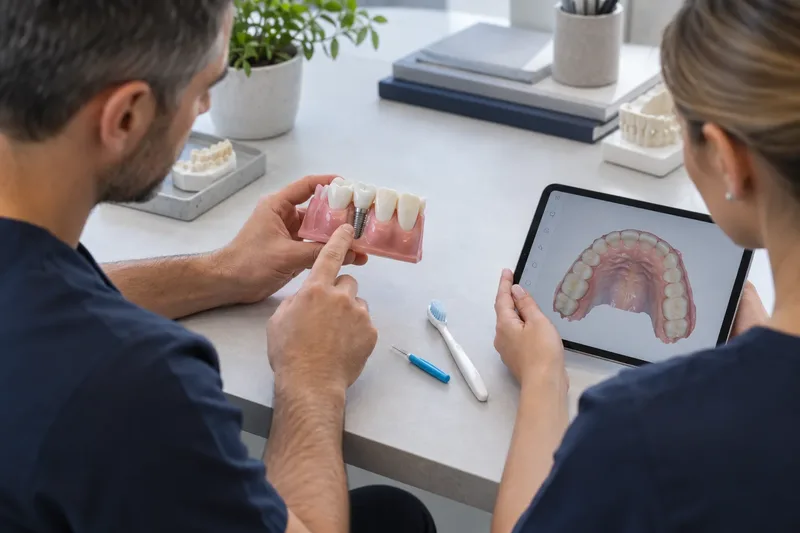
A useful consultation also asks how the completed result will be maintained. Can the patient clean around the proposed crown, bridge or veneer margins? What professional review is recommended? Which symptoms should prompt a local dental visit after travel? For implant patients, the follow-up after dental treatment guide explains why treatment summaries, component records and local routine care should be considered before leaving China.
Questions to ask before choosing a treatment order
Ask the clinician what they see in the gums and supporting bone, whether any active disease or hygiene concern needs attention first, and how those findings change the implant or veneer options. Ask which steps are diagnostic, which are preventive or therapeutic, and which are restorative. If a plan is staged, ask what the next review will assess before moving forward.
It is also reasonable to ask how the final restoration will be shaped for cleaning, what home-care routine is expected, and how a local dentist can be involved after travel. The goal is not to secure a remote guarantee; it is to understand the decisions that protect both the visible result and the tissues around it.
Plan travel around the confirmed clinical pathway
Gum assessment, periodontal care, implant surgery, healing, temporary restorations, veneer preparation and final delivery may occur in different sequences for different patients. Do not let an airline ticket dictate whether a clinical issue is ignored or rushed. If more than one visit is proposed, ask what must be stable or reviewed before the next stage and what interim solution may be appropriate.
Implant treatment timelines can include separate surgical and restorative stages. The clinician’s confirmed plan and aftercare instructions take priority over general information online.
Start with a gum-health and restorative assessment
If you are considering implants or veneers in China and want to understand how gum health may affect your options, begin with your records, health context and goals. You can request a gum-health and restorative planning conversation before travel. The next step is a clinician-led Beijing assessment—not a guarantee that gums are suitable, a cosmetic result can be confirmed, or every treatment stage can be completed on a fixed schedule.
This guide is general information, not a diagnosis or personal treatment recommendation. Seek advice from a licensed dental professional who can examine you.
Related patient guides

Porcelain Veneers in China: A Clinician-Led Smile Design Service
See how a porcelain veneer service in China moves from smile goals and records to clinical assessment, design review, ceramics and follow-up.
Read the guide →
Front Tooth Implants in China: Temporary-Tooth and Smile Planning
Explore clinician-led planning in China for a missing or failing front tooth, including records, temporary-tooth options, gum and bite assessment, and final crown coordination.
Read the guide →
What Dental Records Do You Need for Implants in China?
Use this pre-travel checklist to organise imaging, photos, health history and goals before an implant review in China.
Read the guide →
Dental Treatment Follow-Up After You Return Home
Good follow-up starts with records, realistic expectations and knowing when local urgent care is appropriate.
Read the guide →