
Full-Mouth Reconstruction in China: A Coordinated Care Service
See how a full-mouth reconstruction service in China brings complex records, Beijing diagnostics, phased restorative planning and follow-up into one clearer pathway.
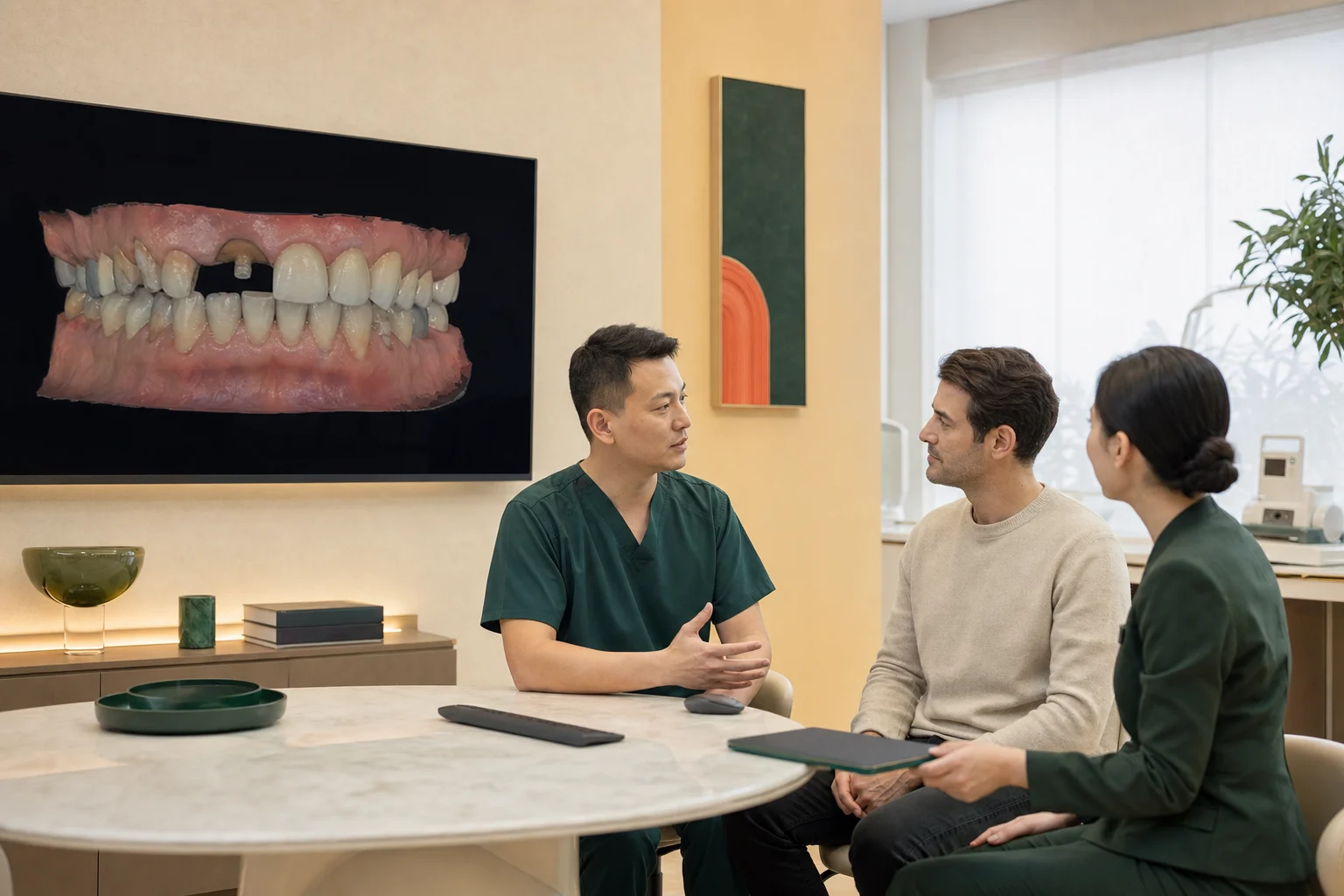
When several dental problems affect the same mouth, it is rarely helpful to think in isolated procedures. Missing teeth, worn biting surfaces, failing crowns or bridges, unstable dentures, gum concerns and changes in bite can influence one another. Full-mouth reconstruction is the name often used for a comprehensive plan that rebuilds or replaces multiple teeth with a clear restorative end point. Our full-mouth reconstruction service in China is designed to help international patients organise that complex conversation before travel, then connect it to a clinician-led assessment in Beijing.
China Dental Implants and Pinnacle Medical China coordinate patient-side preparation, appointments and communication. Licensed partner clinicians are responsible for diagnosis, treatment recommendations, consent and all clinical care. That distinction is essential in a complex case: a coordinator can make the pathway easier to understand, but cannot decide which teeth are restorable, how the bite should be rebuilt or whether implants are suitable.
A reconstruction plan is bigger than a list of procedures
Full-mouth reconstruction may combine different restorative tools, including crowns, bridges, veneers, dental implants, removable prostheses or other preparatory care. The appropriate combination depends on what remains healthy, what needs stabilising and what function the final teeth must provide. It is not a standard “new teeth” package, and it is not automatically an implant treatment for every patient.
For some people, the priority may be replacing extensive tooth loss. For others, it may be managing worn or repeatedly failing restorations, restoring chewing comfort, addressing an unstable bite or deciding which natural teeth can be kept. The dental implant service overview explains one part of this wider picture, but a full reconstruction should be planned from the final restorative goal backwards—not from an online procedure list forwards.
Who may find this service useful?
The pathway may be relevant to adults with multiple missing teeth, several failing crowns or bridges, advanced wear, a bite that has changed over time, failing dentures, or a mixture of dental concerns that cannot be solved sensibly one tooth at a time. It may also help a patient who has received several different proposals and needs a more coherent set of questions before arranging a trip.
It is not a replacement for urgent care. Pain, swelling, trauma, uncontrolled bleeding or signs of infection need local prompt assessment. For planned treatment, the key question is not “How quickly can everything be done?” but “What needs to be diagnosed, stabilised and sequenced so the final plan is maintainable?”
Step 1: build a complete starting picture before travel
Complex care benefits from complete context. Patients can share recent panoramic imaging or CBCT data if available, photographs, previous treatment plans, existing implant records, details of crowns, bridges or dentures, and relevant medical and medication history. Clear notes about chewing problems, grinding, past gum treatment, dental anxiety and travel constraints can be useful too. The proposed clinic may still require its own imaging, scans or records in Beijing.
We also ask patients to describe the outcome they are trying to understand. Are they hoping to improve chewing, stabilise a denture, replace visible failing work, restore a worn bite, avoid repeated short-term repairs, or simply learn what can realistically be preserved? A pre-travel records checklist is a useful starting point, even though a comprehensive reconstruction needs a broader review.
Step 2: identify the clinical decisions that cannot be made online
A remote conversation may help organise information, identify the proposed partner setting and discuss a possible appointment window. It cannot confirm the diagnosis. On site, the treating dentist may need to examine teeth and gums, assess the bite and jaw relationship, review bone and nearby anatomy, evaluate existing restorations and decide which problems should be addressed first. A prosthodontic or restorative perspective can be especially important because the final teeth, bite and hygiene access influence the whole sequence.
The clinician may recommend a comprehensive route, a more limited phased plan, preparatory gum care, extractions, endodontic or restorative treatment, implant planning, temporary restorations, or a combination of options. They may also explain why a previously suggested option is not suitable. The purpose of the Beijing assessment is not to force a pre-set plan through; it is to arrive at a safer, better-informed one. Our full-mouth reconstruction treatment page outlines the kind of staged strategy that may be considered.
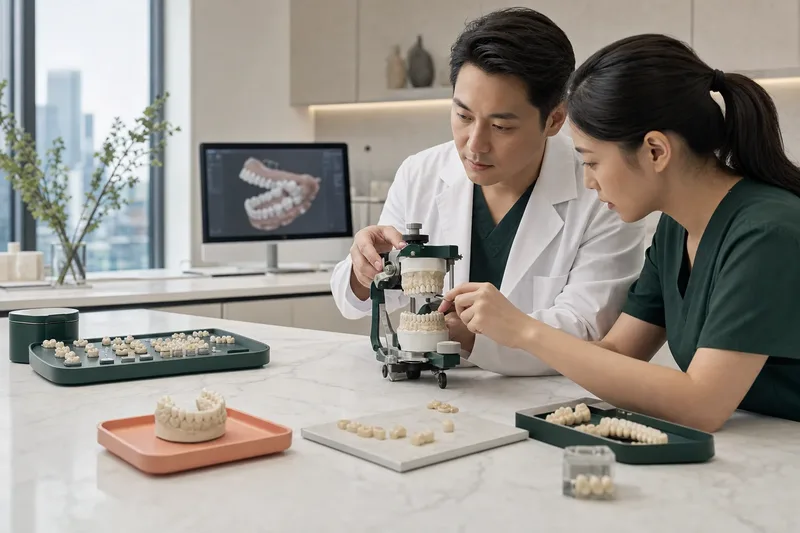
Step 3: agree the restorative end point before individual stages begin
In complex dentistry, the final result has to guide the early stages. The clinician may use photographs, digital scans, diagnostic models and bite records to discuss tooth position, facial support, function, available restorative space and the way upper and lower teeth meet. This is how the team tests whether a proposed bridge, implant-supported restoration, crown or other solution can work as part of the whole mouth.
That planning can make the pathway feel more deliberate, but it does not turn a digital image into a guarantee. The design may change when the clinician sees tissue quality, bone, tooth structure or bite behaviour in person. A patient should understand what is provisional, which decisions are still open and what alternatives exist before consenting to any irreversible step.
Step 4: phase care around health, function and healing
Some cases can be approached in one coordinated treatment period. Others need separate diagnostic, surgical and restorative phases, sometimes with healing or review time in between. If an implant-supported solution is considered, the need for bone grafting, extraction timing, tissue healing and the proposed restoration can all affect the sequence. The final schedule belongs to the treating clinician, not to a flight booking.
Immediate loading or fixed provisional teeth may be discussed for selected full-arch cases, but they are clinical decisions rather than travel-package promises. Our guide to what may affect immediate-loading eligibility explains why bone, stability, bite and case-specific risk matter. A responsible service gives the patient enough time to understand a changed recommendation instead of making travel dates the deciding factor.
Step 5: use temporary stages as an opportunity to review
Where clinically appropriate, temporary or provisional restorations can help the treating team review comfort, speech, tooth proportions, aesthetics and the bite before final materials are completed. They are not merely a waiting-room step. For a complex reconstruction, this review can provide useful information about what needs adjustment and whether the patient understands the maintenance requirements of the final plan.
Not every patient will follow the same route or receive the same type of provisional work. The clinician explains what is appropriate for the individual case, how it should be cared for and what restrictions may apply. Patients should avoid treating a temporary stage as proof that a final restoration is already decided.
Coordination should clarify responsibilities, not blur them
China Dental Implants and Pinnacle Medical China help international patients collect useful records, understand the proposed partner setting, coordinate appointment windows and route practical questions to the appropriate team. We can help the patient keep a clearer record of the discussion and coordinate non-urgent communication after treatment.
We do not diagnose, select a treatment design, perform procedures, approve materials or promise a clinical result. The licensed clinician and clinic remain responsible for those decisions, consent, clinical documentation and aftercare instructions. Clear boundaries are particularly important when several specialties or treatment stages may be involved.
Plan travel around clinical review, not the other way around
Full-mouth care can require more than one visit, particularly when a plan includes healing, laboratory work or staged restoration. A patient should allow room for on-site diagnostics, consultation, treatment where appropriate and the reviews the treating dentist recommends. If the plan changes after examination, that flexibility protects the patient from feeling pressured to proceed simply because flights and accommodation have been arranged.
Before leaving Beijing, ask which records the clinic will provide, how any implants or restorative components are documented, which follow-up visits are needed and what local dental support may be sensible at home. The wider principles in our dental treatment follow-up guide can help patients prepare for continuity of care after travel.
Start with a complete story, not a fixed request
You do not need to decide on implants, veneers, crowns or a final number of teeth before contacting us. Begin with the problems you are living with, the treatment you have already had, the records you can share and the practical limits of your travel. You can request a preliminary full-mouth reconstruction review; the next step is to clarify what can be discussed from records and what must wait for the licensed clinician’s examination in Beijing.
This guide is general information, not a diagnosis or personal treatment recommendation. Seek advice from a licensed dental professional who can examine you.
Related patient guides
All-on-4 in China: 12 Questions to Ask Before You Travel
Full-arch implant treatment is complex. These questions help international patients compare a proposed pathway beyond price.
Read the guide →
Dental Treatment Follow-Up After You Return Home
Good follow-up starts with records, realistic expectations and knowing when local urgent care is appropriate.
Read the guide →
Immediate Loading After All-on-4: What May Affect Eligibility?
Immediate loading can be appropriate for selected cases, but it is a clinical decision rather than a travel package guarantee.
Read the guide →
What Happens at an On-Site Dental Assessment in China?
An on-site assessment is where a preliminary idea is checked against examination, imaging and real clinical findings.
Read the guide →